Comparing Qatar vs. Other GCC Real-Estate Markets for Mid-Risk Investors

Key Takeaways
For mid-risk investors seeking exposure in the GCC, Qatar offers a compelling balance of steady fundamentals, infrastructure-driven growth, and regulatory clarity. While yields are more modest (gross residential yields around 5 %-6 % in Q1-2025) compared with some UAE and Saudi markets, transaction activity in Qatar surged nearly 30 % in Q2 2025, signaling momentum. The state provides low transaction tax burdens and clear ownership rules in freehold zones. Meanwhile, other markets like the UAE (Dubai/Abu Dhabi) and Saudi Arabia offer higher liquidity and larger scale but carry higher price-risk and supply pressures.
Market Context & Why Qatar Stands Out

Qatar’s residential real-estate sector has seen strong activity: Q2 2025 recorded QAR 8.9 billion (~US$2.4 billion) in total transactions, up 29.8 % year-on-year. The average asking price for apartments in Q1 was about QAR 10,420 per square metre and luxury villas about QAR 5,500 per m². For mid-risk investors, this means entry thresholds in many sub-markets are lower than some luxury-heavy segments elsewhere in the Gulf. In contrast, markets such as Dubai or Abu Dhabi often involve higher entry prices and more speculative new-supply risk.
Yield & Growth Comparisons
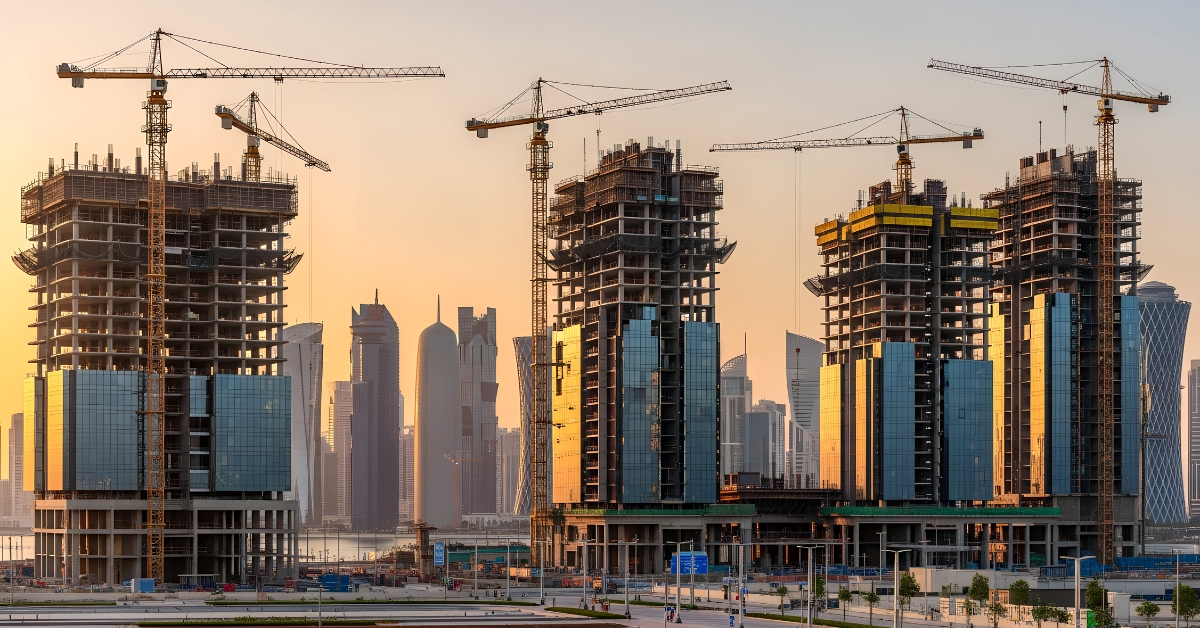
In Qatar, gross residential yields averaged around 5.9% in early 2025, with apartments recording up to 8.4 % in smaller units, and villas around 4.6 %. For comparison, select UAE markets report residential yields in the 6-8 % range for well-located apartments, though they may come with higher purchase prices and elevated maintenance costs. On growth, Qatar’s price index showed a 12.4 % year-on-year increase in April 2025. Mid-risk investors looking for stable growth with moderate yields may find Qatar more predictable than markets showing more volatile cycles or speculative supply.
Risk Factors & Market Considerations
While Qatar offers structure, investors must still assess risk across factors such as:
- Supply pipeline: Some GCC markets face large upcoming completions, which may pressure rents.
- Regulatory clarity: Qatar has clearly defined freehold zones and foreign-ownership rules, which reduce legal risk for foreign buyers.
- Exit strategy and liquidity: Mid-risk investors need to plan for resale or rental periods; deeper markets may offer quicker exit options but also sharper corrections.
How FGREALTY Can Assist Mid-Risk Investors
At FGREALTY, we support international investors targeting the Gulf who want a balanced portfolio exposure. Whether you’re comparing properties for sale in Qatar or looking at GCC alternatives, our team delivers: verified data on yields, clear breakdowns of freehold zones in Qatar, and local insight into sub-markets that match your risk tolerance.
Contact the FGREALTY agents to receive a tailored comparison report outlining opportunities, projected yields, and growth potential.
FAQs
Q: Is Qatar good for mid-risk property investors?
A: Yes. Qatar offers rental yields around 5–6%, strong tenant demand, and a stable economy supported by government-backed projects.
Q: Can foreigners own property in Qatar?
A: Yes, non-Qataris can buy in freehold zones like The Pearl, Lusail, and West Bay Lagoon, with ownership rights and renewable residency benefits.
Q: How do Qatar’s rental returns compare to other GCC markets?
A: Qatar’s yields are slightly lower than Dubai’s but steadier, offering long-term income stability with less exposure to speculative risk.
Q: Are there property taxes in Qatar?
A: No. Qatar has no property tax or capital gains tax, making it attractive for international investors.
Q: What’s the safest way to invest in Qatar real estate?
A: Work with trusted brokers like FGREALTY, who provide verified listings, market insights, and full guidance on legal ownership and yields.