Walkability Is Becoming a Real Property Advantage in Qatar
Key Takeaways
- Qatar’s urban planning framework increasingly links walkability with compact, mixed-use and transit-oriented development.
- Lusail’s master plan includes 67 km of cycle and pedestrian routes connecting its districts.
- Lusail also planned an integrated light-rail system with 38 stations across 38 km, connecting its districts.
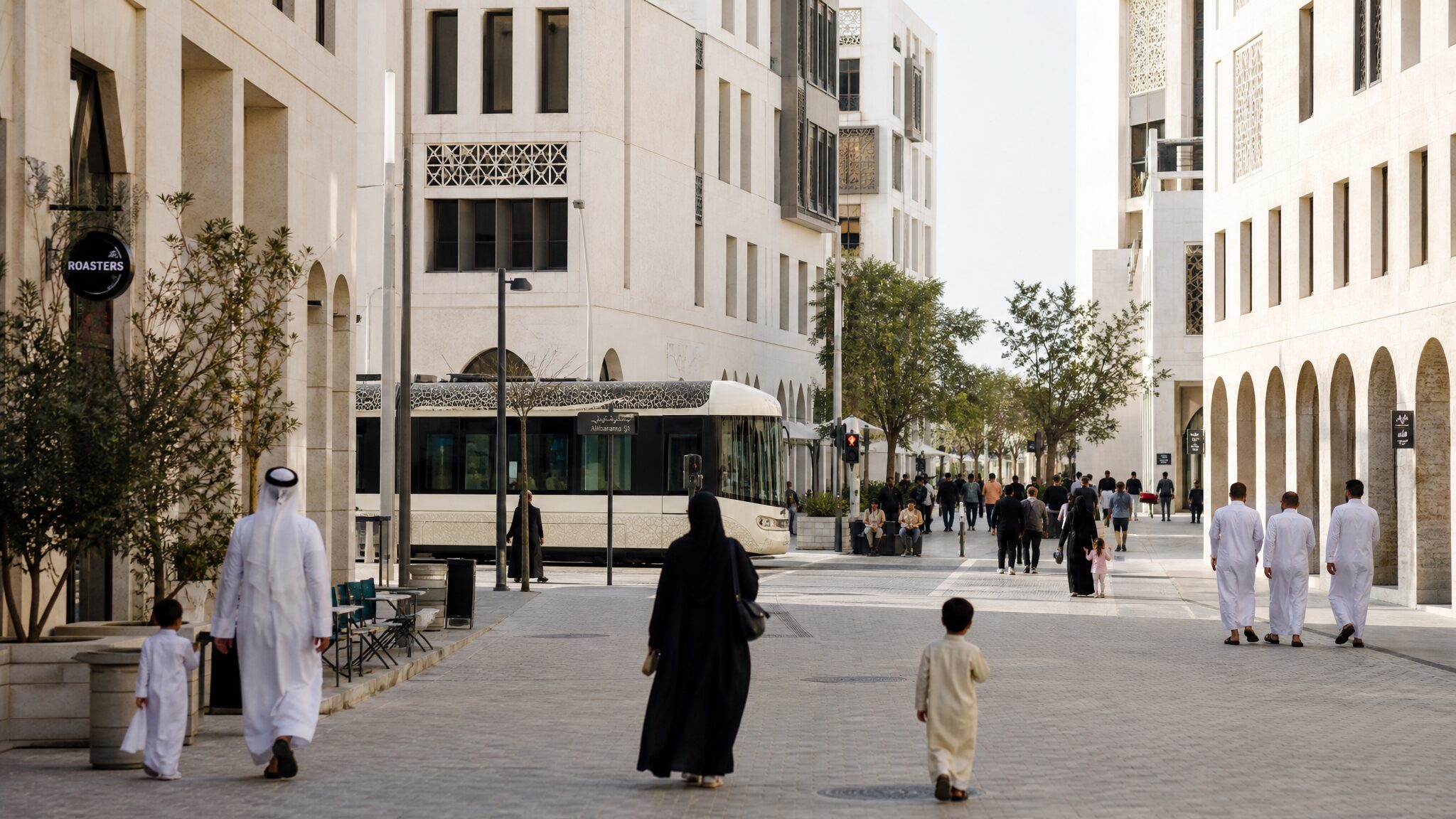
- Msheireb Downtown Doha includes pedestrian-friendly streets, an internal tram network and direct access to Msheireb Metro Station.
- Qatar’s road-planning guidance specifically calls for safe, comfortable walking opportunities, shaded sidewalks and active streets.
- For buyers, walkability should be assessed at the building, block and community level, not simply by checking whether a property is “near a metro station.”
- Walkability does not automatically mean higher property returns; it is one factor to assess alongside location, supply, building quality, service charges and demand.
Why Is Walkability Becoming More Important in Qatar Real Estate?
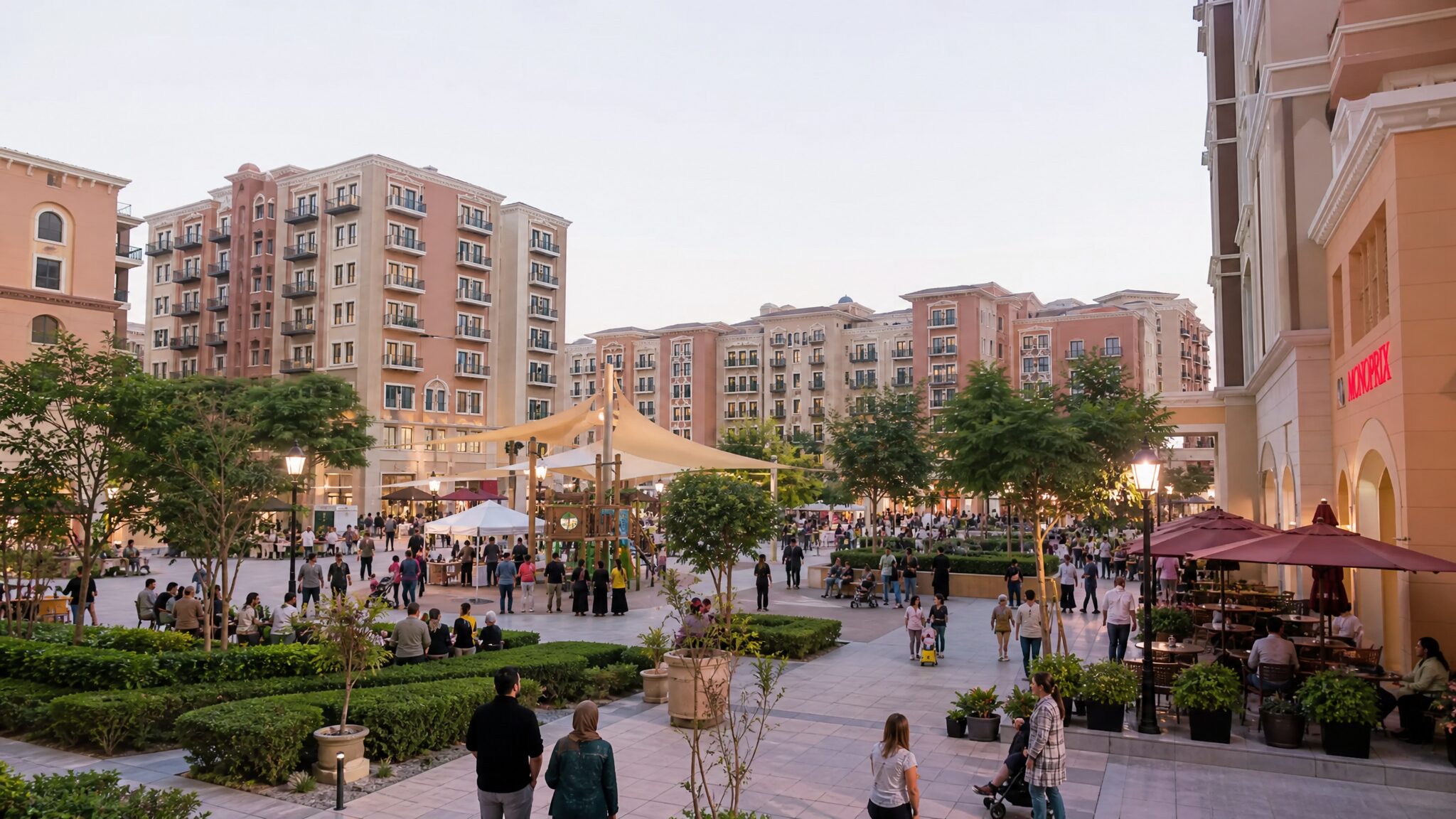
Walkability is becoming a more relevant property consideration because Qatar’s urban planning is moving beyond roads and vehicle access toward integrated communities where homes, retail, public spaces and transport can sit closer together. This is particularly visible in planned districts such as Lusail and Msheireb Downtown Doha.
The shift is also reflected in Qatar’s planning documents. The country’s road-planning guidance states that livable neighborhoods require infrastructure for non-motorized transport and that roads should provide safe and comfortable walking opportunities. It also highlights shaded sidewalks and active public spaces as important elements of urban design.
For property buyers, this changes the question from “How close is the property to a road?” to “How easily can I reach the places I use every day?”
What Makes a Qatar Community Truly Walkable?
A walkable community is not simply one with sidewalks. It needs a combination of connected pedestrian routes, useful destinations, shade, crossings, public transportation, and services that reduce the need for short car trips.
Connectivity matters more than distance
A property may sit 500 meters from a retail area but still be inconvenient to reach if pedestrians must cross major roads or navigate disconnected sidewalks.
Qatar’s planning approach increasingly recognizes this issue. The national road-planning guidance connects walkability with street design, public spaces, and access to non-motorized transport.
When evaluating a property, buyers should check:
- Continuous pedestrian routes
- Safe road crossings
- Shaded walking areas
- Access to retail and dining
- Parks and public spaces
Which Qatar Communities Show the Strongest Walkability Features?
Lusail and Msheireb Downtown Doha provide two of the clearest examples of master-planned pedestrian connectivity in Qatar, although they achieve it through different urban models.
Lusail
Lusail’s master plan incorporates 67 km of cycle and pedestrian routes intended to connect the city’s districts. The city also planned an integrated light-rail network covering 38 stations across 38 km, alongside park-and-ride facilities and other transport connections.
The planning philosophy goes further than transportation. Lusail’s master plan calls for mixed-use plots, district-level civic facilities, neighborhood gardens and public spaces within walking distance of residential areas.
This makes walkability particularly relevant when comparing apartments in different parts of Lusail. The strongest proposition is not necessarily the building with the shortest road distance to a destination, but the one with the better day-to-day pedestrian connection to services, transit and public spaces.
Msheireb Downtown Doha
Msheireb offers a more concentrated urban model. Its official development material highlights pedestrian-friendly streets, an internal tram network and proximity to the city’s main metro station.
Its Sikkat Wadi Msheireb is described by Msheireb Properties as the longest pedestrian street in Qatar, extending from Msheireb Metro Station toward Souq Waqif and incorporating hotels, retail, commercial and residential uses.
For residents who value access to restaurants, retail, cultural destinations and public transport without relying on a car for every short trip, this type of urban structure can be particularly relevant.
Does Walkability Affect Property Value?
Walkability can strengthen a property’s practical appeal, but it should not be treated as a guaranteed source of price appreciation or rental returns. Qatar’s official planning documents establish the importance of walkable and transit-oriented development, but that does not establish a universal price premium for every walkable property.
For investors, the better approach is to treat walkability as one component of location quality.
A walkable property may have an advantage when it combines:
- Strong public transportation access
- Established retail and dining
- Limited competing supply
- High-quality public spaces
- Good building management
- Attractive views or orientation
- Suitable unit layouts
- Strong tenant or buyer demand
This distinction matters. A building may have a beautiful promenade but still perform differently from another property because of service charges, unit configuration, maintenance, developer reputation, or competing inventory.
Why Does Qatar’s Climate Make Walkability Different?
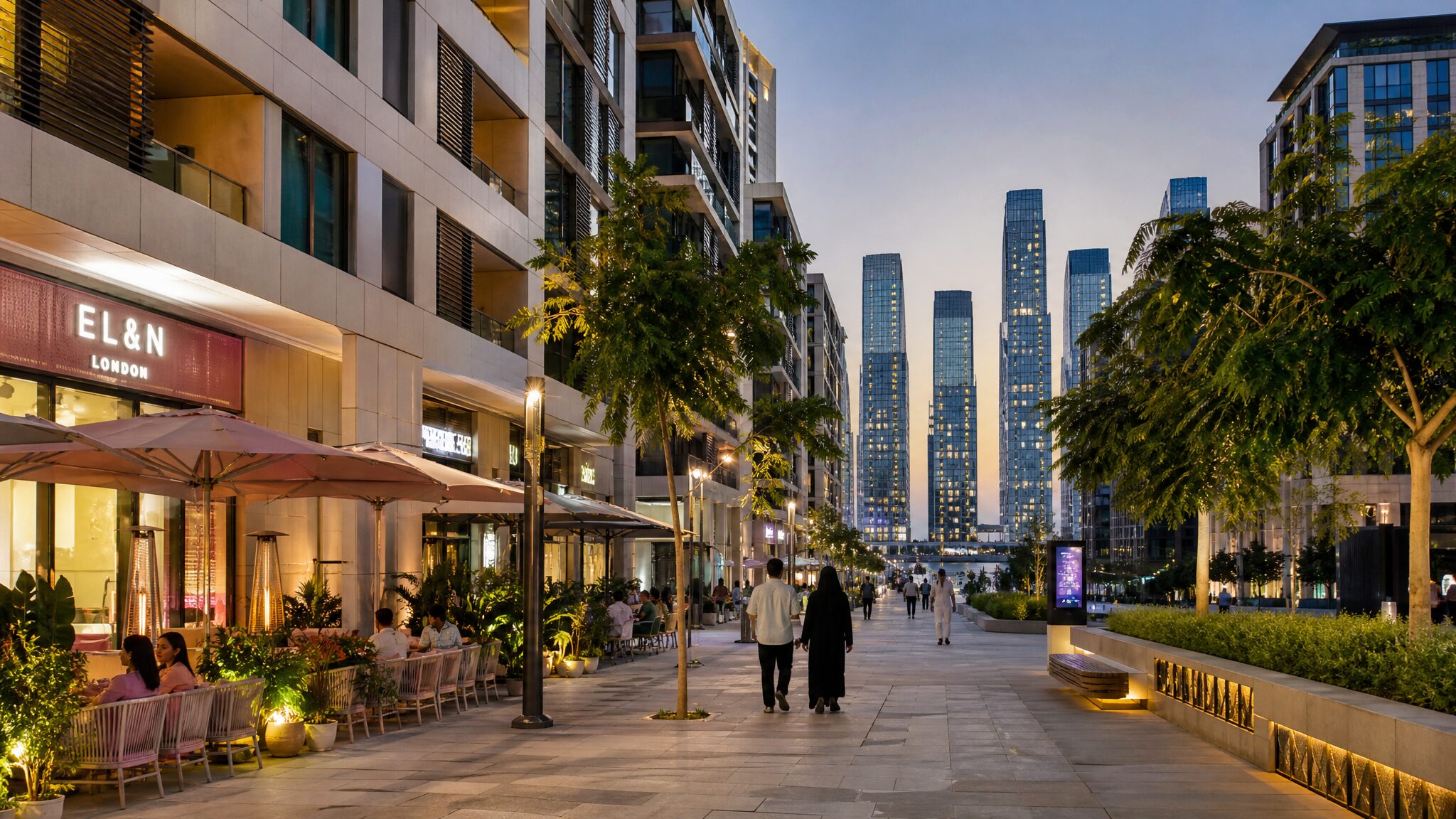
Qatar’s climate makes the quality of pedestrian infrastructure especially important. Walking distance alone does not tell buyers whether a route is practical for daily use. Shade, covered connections, landscaping, seating, and the quality of pedestrian crossings can significantly change how useful a short-distance route feels.
Qatar’s official road-planning guidance specifically identifies shading as an element that can help sidewalks remain usable and support active streets and public spaces.
This is why buyers should inspect the actual route rather than relying solely on a map.
What Should Investors Check Before Buying in a Walkable Community?
Use this checklist before comparing two properties:
- Pedestrian network: Are routes continuous?
- Shade: Is walking practical during Qatar’s hotter months?
- Transit: Is the property connected to Metro or tram services?
- Daily needs: Can residents reach essential services without driving?
- Public realm: Are streets, plazas and parks maintained?
- Building access: Is the pedestrian entrance convenient?
- Supply: How many competing properties offer similar connectivity?
- Unit fundamentals: Does the property also have a suitable layout, view, condition and service-charge structure?
Walkability should strengthen a sound property decision, not replace one.
How FGREALTY Can Help
FGREALTY helps buyers compare Qatar properties based on the factors that matter to their intended use, including community location, property type, transportation access and surrounding amenities.
For international buyers and relocating residents, this can include:
- Verified property listings
- Community and area comparisons
- Residential property selection
- Location and connectivity assessment
- Buying guidance
- Relocation support
- Investment-oriented property comparisons
The practical goal of FGREALTY agents is to help buyers evaluate the property and its surroundings together, rather than making a decision based only on the apartment or villa itself.
FAQs
Q: What is the difference between a walkable community and a pedestrian-friendly building?
A: A pedestrian-friendly building may provide good sidewalks or entrances, while a walkable community connects multiple destinations through a broader network of routes, public spaces and transport options.
Q: Does Qatar’s Metro automatically make a neighborhood walkable?
A: No. Metro proximity is only one factor. The quality of the pedestrian route between the property and station, including crossings, shade and continuity, also matters.
Q: How can I assess walkability if I am buying remotely?
A: Request a precise location and examine the surrounding pedestrian routes, transport stops, retail, parks and road crossings. A local property adviser can also help assess the immediate surroundings before you travel.
Q: Are walkable properties better for families?
A: Not necessarily. Families may place greater value on schools, parks, healthcare, parking and community facilities. Walkability becomes more useful when these destinations are also safely connected.
Q: Why is mixed-use development important for walkability?
A: Mixed-use planning places residential, retail, services and other destinations closer together. Qatar’s planning documents specifically associate compact, mixed-use development with shorter travel distances and improved walking and public transport viability.