Do International Sports Events Raise Long-Term Investment Interest in Qatar Real Estate?

Key Takeaways
- Hosting major international sports events often leads to short-term demand spikes in rental and transaction activity.
- Long-term investment interest depends on legacy infrastructure, ongoing tourism flows, and economic diversification, rather than event hype alone.
- Qatar’s strategic initiatives tied to hosting sports events contribute to infrastructure improvements that support real estate fundamentals.
- Investor focus tends to consolidate in districts with strong transport links, mixed-use planning, and residential-commercial synergies.
- Understanding event legacy and infrastructure outcomes helps distinguish between short-term demand and sustained market interest.
Introduction and Market Context
Major international sports events such as the FIFA World Cup or multi-sport tournaments play a significant role in shaping perceptions of a host country’s economic vibrancy and urban development prospects. For real estate investors and international buyers, the key inquiry is not just whether events generate short-term demand but whether they lead to enduring investment interest grounded in urban planning, transport networks, and diversified economic activity.
While events can deliver immediate boosts in visitor numbers and occupancies, long-term residential and commercial property performance hinges on legacy-oriented infrastructure and the capacity of districts to sustain demand beyond the event itself. Understanding this distinction is crucial for positioning investment strategies in Qatar’s evolving property market.
How International Sports Events Translate to Real Estate Signals
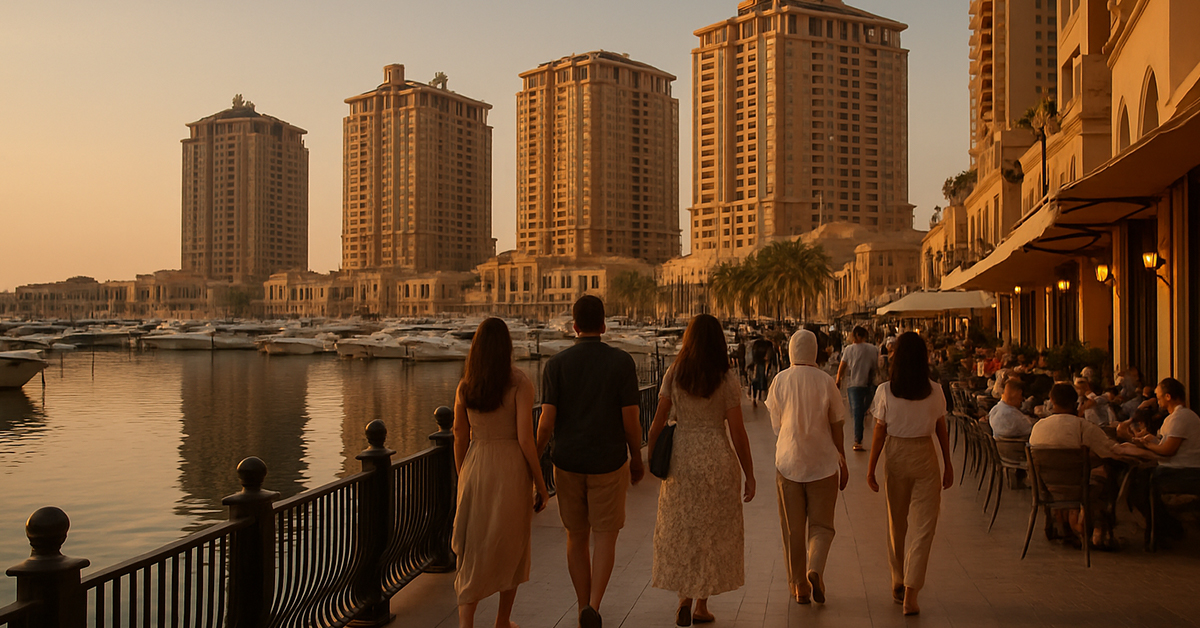
Global sporting events influence real estate demand through several mechanisms:
Infrastructure Acceleration
Preparing for large-scale international events often prompts accelerated investment in transport, utilities, public spaces, and urban connectivity. Enhanced accessibility and faster commuting patterns make nearby neighborhoods more attractive for longer-term residents and businesses alike.
Tourism and Branding
High-profile sporting events elevate a country’s global profile, stimulating tourism and international awareness that can contribute indirectly to sustained interest from investors and expatriate residents. Historical case studies indicate that cities that host mega events often experience legacy effects where urban branding continues to draw visitors and business activity.
Short-Term Demand Patterns
During event periods, temporary demand for short-stay accommodation and rentals can spike significantly. While these spikes are often transient, they can signal latent interest in the broader hospitality and rental market that certain investors seek to capitalize on.
Evaluating Long-Term Investment Signals
Legacy Infrastructure Matters
Research on mega events such as the FIFA World Cup and Olympics shows that legacy effects on infrastructure can shape investment sentiment in the long term — particularly where transport networks, livability improvements, and public services endure.
Event Announcements and Market Signals
Historical data from major sporting event studies suggest that even the announcement of a major event can influence property values in host regions prior to the start of the event, especially when infrastructural investments are anticipated.
Differentiating Event Hype from Structural Growth
While some real estate markets see price spikes due to speculation around events, systematic analyses find that sustained long-term growth is more closely tied to broader economic drivers, regulatory reforms, and infrastructure development rather than event hype alone.
What This Means for Qatar’s Real Estate Market
In Qatar’s context, hosting the 2022 FIFA World Cup has delivered visible upgrades to transport networks, urban districts, and hospitality assets.
These improvements have a dual function: meeting immediate event needs and enhancing urban mobility and connectivity — key elements that underpin long-term residential and investment appeal.
For real estate investors, the important distinction is focusing on neighborhoods with enduring demand drivers, such as proximity to economic hubs, metro connectivity, quality of life amenities, and mixed-use balance, as opposed to areas that exhibit only event-driven momentary traffic.
How FGREALTY Helps Align Investment Strategy With Event Impact
At FGREALTY, we support international buyers and investors in making informed decisions that account for both short-term market movements and long-term strategic indicators. Our services include:
- Verified property listings tailored for investment potential across established and emerging districts.
- Area performance insights with comparisons of residential zones informed by infrastructure developments.
- Advisory on long-term planning and expected demand patterns, bridging event legacy context with real estate fundamentals.
Whether you are exploring investment in apartments for sale in Qatar’s prime districts or considering commercial property investment, our agents’ market-backed guidance helps translate macro trends into actionable local decisions.
FAQs
Q: Do international sports events permanently raise real estate prices in host countries?
A: Not necessarily. While events can create temporary demand spikes, lasting price and investment effects usually depend on legacy infrastructure and economic diversification more than the event alone.
Q: Which type of infrastructure matters most for long-term real estate strength?
A: Transport connectivity, utilities reliability, mixed-use urban planning, and cultural amenities consistently contribute to sustained demand beyond event cycles.
Q: Can hosting sporting events improve global perception of a real estate market?
A: Yes. Increased international visibility and elevated tourism profiles can attract foreign interest and support investor confidence over time.
Q: Should investors focus on event periods for entry timing?
A: Timing investment purely around events is less effective than aligning with broader economic fundamentals and legacy-driven infrastructure growth.