Mixed-Use Developments Are Reshaping Property Investment in Qatar
Key Takeaways
- Mixed-use development is a defined part of Qatar’s national spatial-planning strategy, not simply a developer marketing concept.
- Qatar’s National Master Plan promotes mixed land uses, transit-oriented development, active ground floors and pedestrian-oriented centers.
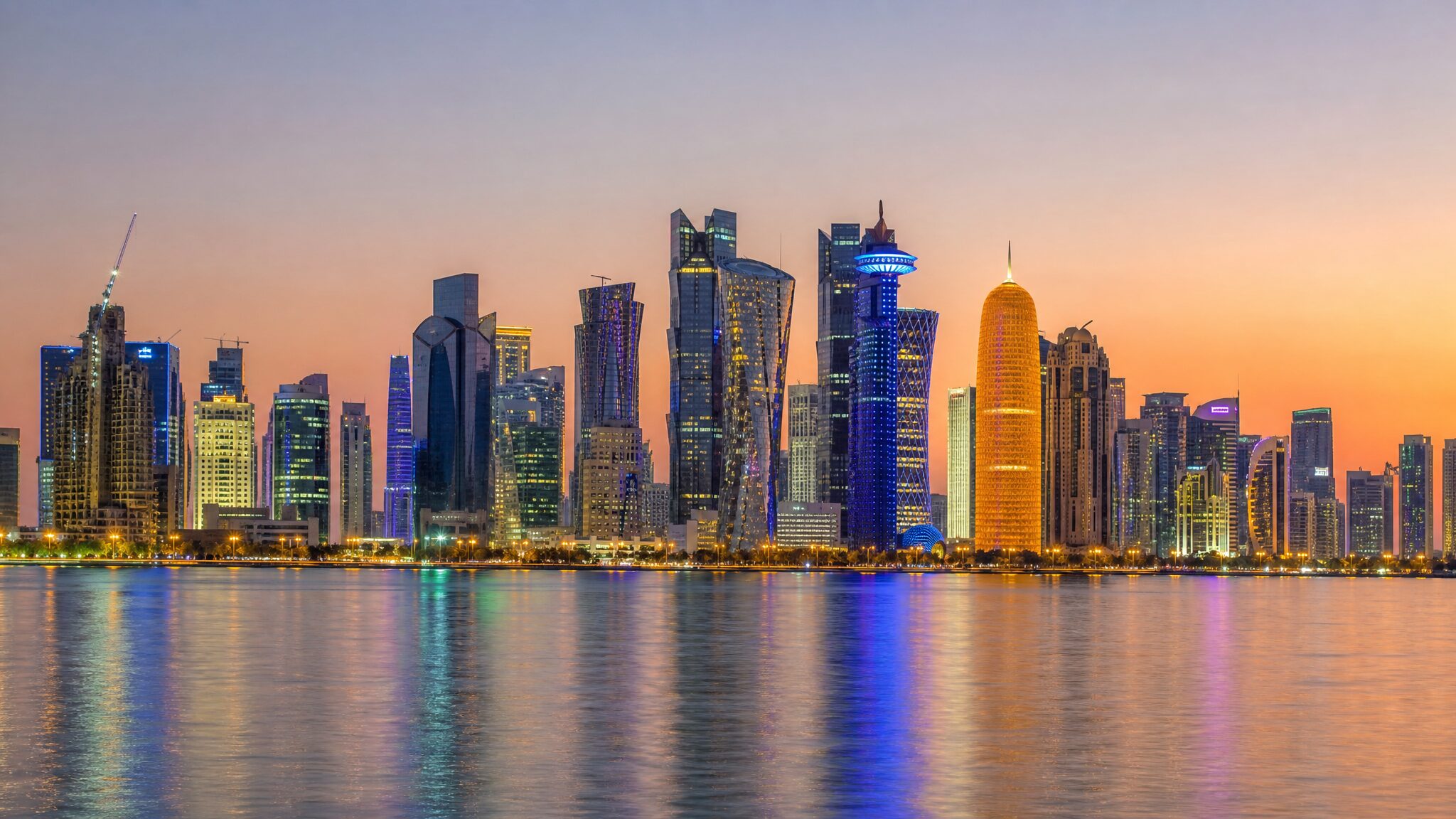
- Lusail is planned as a self-contained city with residential, commercial, retail, hospitality, education, healthcare and entertainment uses.
- Lusail’s master plan covers 38 square kilometers, while official planning material anticipates more than 200,000 residents, 170,000 workers and 80,000 visitors across the city.
- Msheireb Downtown Doha has more than 100 buildings combining residential and commercial uses with retail, cultural attractions, hotels and education.
- Qetaifan Island North combines residential areas with hospitality, entertainment, retail, education and healthcare within a 1.3–1.4 million sqm master-planned waterfront development.
- Mixed-use does not automatically mean better returns. Investors still need to assess unit economics, supply, service charges, tenant demand, location and the quality of the surrounding development.
Why Are Mixed-Use Developments Becoming More Important in Qatar?
Mixed-use developments are gaining importance because Qatar’s planning framework increasingly favors compact, connected communities where residential, commercial, retail and public uses operate together. For investors, this creates a different property proposition: demand can come from residents, workers, visitors and businesses rather than from a single user group.
This direction is visible in the Qatar National Development Framework and Qatar National Master Plan. The planning framework identifies integrated public transport, sustainability and livability as core objectives, while the Centre Plans specifically promote mixed uses, active ground floors and pedestrian orientation.
That matters because the surrounding environment can influence how useful a property becomes.
An apartment above or beside restaurants, supermarkets, offices, parks and transport can serve a different tenant profile from an apartment in an isolated residential building.
How Does Mixed-Use Planning Support Property Demand?
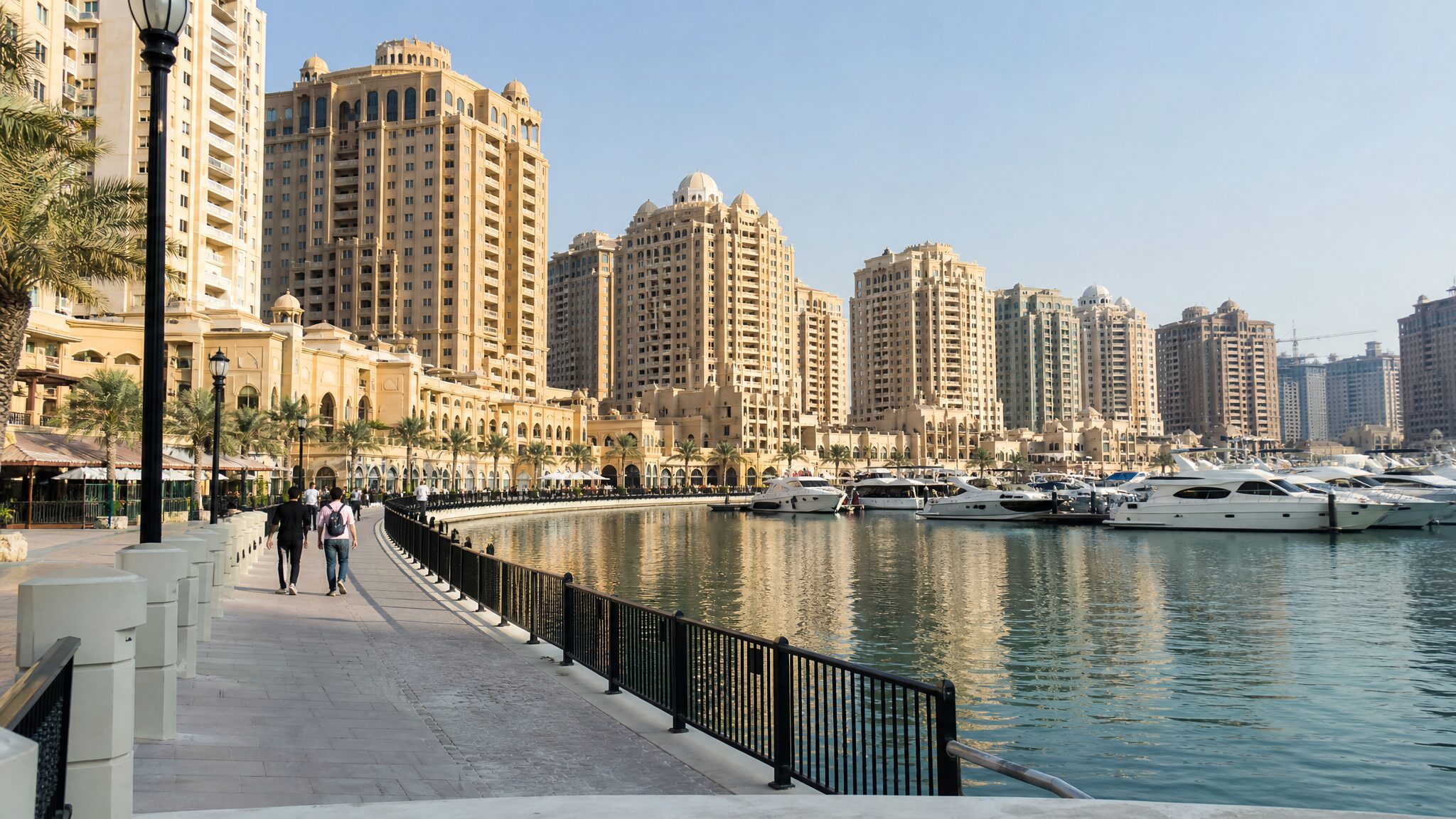
Mixed-use communities can create multiple reasons for people to visit and remain in an area. Qatar’s planning documents explicitly connect mixed-use development with shorter travel distances, better use of infrastructure, walking and public transport, and more active urban centers.
Residential demand
Residents gain access to daily services closer to home, including retail, dining, recreation and community facilities.
Commercial demand
Businesses can benefit from nearby residents, workers and visitors. This can create a larger potential customer base than a standalone commercial location.
Investment demand
For investors, the important question is whether the combination produces sustained demand for the specific property being purchased.
Mixed-use planning is therefore best viewed as a demand-supporting framework, not a guarantee of capital growth or rental performance.
What Does Lusail Show About Qatar’s Mixed-Use Model?
Lusail provides one of Qatar’s clearest examples of mixed-use development at city scale. Its master plan incorporates residential, commercial, retail, hospitality, community facilities, offices, entertainment and open spaces across different districts. Official material describes Lusail as a self-contained city rather than a conventional residential project.
The scale is significant.
Lusail covers approximately 38 square kilometers. Its official investment material projects more than 200,000 residents, around 170,000 professionals working across its districts, and approximately 80,000 visitors to entertainment, recreation, retail and hospitality facilities.
This creates an important investment distinction. An investor is not only buying into an apartment building; depending on the location, the property sits within a larger ecosystem of residential, business and lifestyle activity.
For buyers comparing Lusail apartments, the next question should therefore be: Which district and building have the strongest relationship with the services and demand drivers I actually need?
Why Is Msheireb Downtown Different?
Msheireb Downtown Doha demonstrates a more concentrated form of mixed-use development, bringing residential, commercial, retail, hospitality, education, culture and public spaces into a central urban district. Msheireb Properties states that the development contains more than 100 buildings and includes residential and commercial spaces, retail, cultural attractions, entertainment, Qatar Academy Msheireb and three major hotels.
Its model is particularly relevant to investors interested in urban properties where proximity to employment, retail, dining and public transportation forms part of the location proposition.
It also illustrates why “mixed-use” should not be treated as one property category. A residential unit in a dense downtown environment serves a different market from a villa within a mixed-use waterfront destination.
How Does Qetaifan Island North Expand the Mixed-Use Concept?
Qetaifan Island North takes mixed-use development into a waterfront destination model, combining residential, hospitality, entertainment, retail and community facilities. Qetaifan Projects describes the development as a fully integrated waterfront destination, while its planning documentation identifies residential and mixed-use buildings alongside leisure, retail, education, healthcare and other facilities.
Official project documentation places the island at approximately 1.3 million sqm, while the current developer website describes it at 1.4 million sqm. The difference reflects the figures published in different project materials, so investors should rely on the latest project documentation when evaluating specific opportunities.
The development includes residential towers and mid-rise buildings, villas, hotels, retail and entertainment destinations. Qetaifan Projects also states that neighborhood retail, parks and food-and-beverage facilities are positioned to serve residential areas, with many amenities intended to be within a short walk.
What Should Investors Look For in a Mixed-Use Property?
The strongest mixed-use investment is not necessarily the development with the most facilities. Investors should determine whether those facilities generate meaningful demand for the specific property.
Before buying, assess:
- Residential supply: How many competing units are available?
- Retail quality: Are the shops occupied and relevant to residents?
- Connectivity: Can residents reach major employment and transport nodes?
- Tenant profile: Who is likely to rent the property?
- Building quality: Does the individual project match the wider development?
- Service charges: Do community and building amenities justify recurring costs?
- Views and orientation: Does the unit offer something competing properties lack?
- Development maturity: Are promised amenities operational or still planned?
- Ownership eligibility: Is the property within an area where the intended buyer can legally own or use the property?
The last point is particularly important for international buyers. Qatar permits non-Qatari ownership and use across 25 designated areas, under specified freehold and usufruct structures. Investors should verify the precise ownership status of an individual property before proceeding.
Does Mixed-Use Automatically Mean Better Investment Returns?
No. Mixed-use planning can strengthen a property’s surrounding demand drivers, but it does not eliminate investment risk. A development can contain excellent restaurants, offices and entertainment facilities while an individual apartment still underperforms because of pricing, oversupply, high service charges or weak unit fundamentals.
Qatar’s overall transaction activity remains substantial. The Ministry of Justice recorded QR1.859 billion in real estate sales-contract transactions across 485 transactions in July 2026, with Doha, Al Rayyan and Al Daayen leading municipalities by transaction value.
The data confirms active market participation, but it does not prove that every mixed-use project will outperform conventional residential property. Investors should analyze the individual asset rather than extrapolate from headline market activity.
What Is the Best Way to Evaluate a Mixed-Use Development?
Use a property-first approach rather than buying solely because a project has a large master plan.
Check the development
Look at:
- Existing versus planned amenities
- Retail occupancy
- Transport connections
- Public spaces
- Community management
- Future competing supply
Then check the property
Compare:
- Price per square meter
- Unit size and layout
- Floor and orientation
- Views
- Parking
- Service charges
- Developer track record
- Rental positioning
- Resale competition
This approach helps separate a strong master plan from a strong individual investment.
How FGREALTY Can Help
FGREALTY can help buyers compare properties within Qatar’s major mixed-use communities based on both the development and the individual asset.
For buyers and investors, this can include:
- Verified property listings
- Community comparisons
- Residential and commercial property options
- Location and connectivity assessment
- Property and price comparisons
- Buying guidance
- Investment-focused property selection
For international buyers, FGREALTY agents can also help identify properties in locations where non-Qatari ownership is permitted, while buyers should confirm the final legal and ownership requirements before completing a transaction.
FAQs
Q: What is a mixed-use property in Qatar?
A: A mixed-use property can combine different functions such as residential, retail, office, hospitality or community uses within the same building, block or wider master-planned district. Qatar’s planning framework recognizes mixed-use zones as areas where combinations such as retail, office and residential uses can be integrated.
Q: Are mixed-use developments suitable for international buyers?
A: They can be, but eligibility depends on the property’s location and ownership structure. Qatar’s non-Qatari ownership framework covers designated areas and specific forms of freehold and usufruct ownership, so buyers should verify the individual property rather than assume every mixed-use project is available to them.
Q: Can mixed-use properties generate both residential and commercial demand?
A: The wider development can serve both groups, but an individual property normally has a specific permitted use. Investors should confirm whether they are purchasing a residential unit, office, retail property or another asset class before evaluating its potential tenant market.
Q: Why are ground-floor retail spaces important in mixed-use communities?
A: Active ground-floor uses can bring regular activity to streets and provide services for residents and visitors. Qatar’s Centre Plans specifically identify ground-floor activation as one of the principles used in designated urban centers.
Q: Is Lusail the only mixed-use investment location in Qatar?
A: No. Lusail is one of the largest examples, but Qatar also has mixed-use environments such as Msheireb Downtown Doha and Qetaifan Island North. The appropriate choice depends on the buyer’s intended use, budget, property type and target demand.