Investing Near Major Infrastructure Projects in Qatar
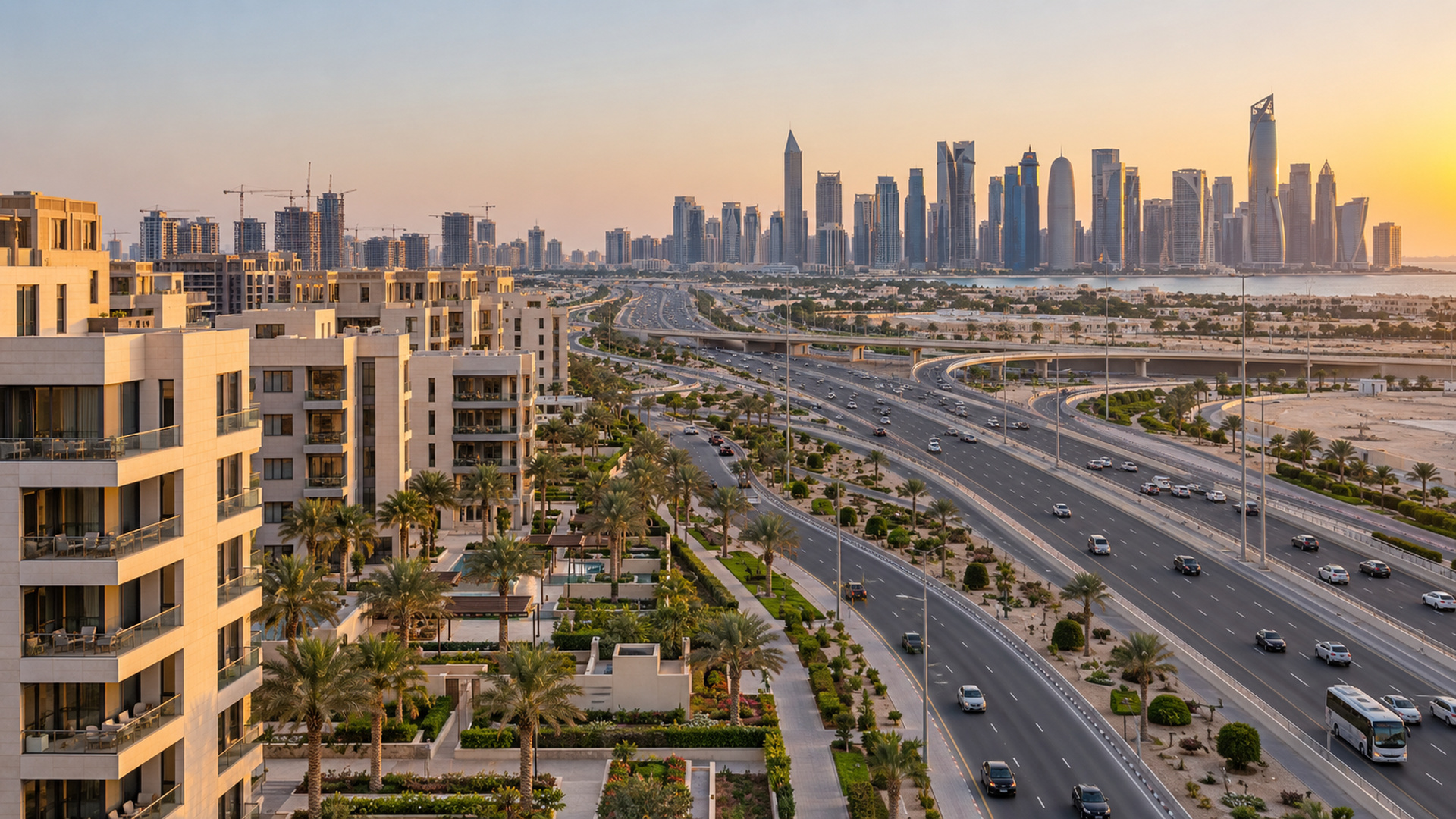
Key Takeaways
- Infrastructure can improve a property’s accessibility, tenant appeal, and long-term marketability, but proximity alone does not guarantee price growth.
- Qatar’s national planning framework specifically links transport, mixed-use development, accessibility, and sustainable urban growth.
- Lusail and surrounding northern districts benefit from major road, transit, pedestrian, and cycling infrastructure.
- Al Daayen recorded QAR 230.3 million in real estate transactions in July 2026, making it one of Qatar’s most active municipalities by transaction value.
- Ashghal’s infrastructure programs continue to expand roads, drainage, utilities, and connectivity across established and emerging communities.
- Airport and port infrastructure creates additional demand drivers for commercial, logistics, residential, and hospitality property.
- Investors should evaluate the infrastructure’s completion status, distance, surrounding development, property supply, tenant demand, and ownership eligibility before buying.
Does Infrastructure Make a Property a Better Investment in Qatar?
Yes, when the infrastructure solves a real accessibility or demand problem. A new metro connection, major road, airport expansion, commercial district, or utility network can make an area easier to reach and more attractive to residents and businesses. But the strongest investment case comes from infrastructure plus demand, not infrastructure alone.
Qatar’s National Development Framework explicitly calls for an integrated public transport network, better accessibility to community facilities, and the integration of major projects into surrounding communities. That makes infrastructure a useful factor when assessing where future property demand could develop.
For investors, the important question is therefore not simply “What infrastructure is coming?” It is:
“What will this infrastructure change about the property’s location, users, and demand?”
How strong is Qatar’s infrastructure investment?
Qatar’s infrastructure strategy extends well beyond individual roads. Ashghal’s Local Areas Infrastructure Programme covers roads, drainage, utilities, and connecting roads across new, central, and suburban areas, with projects added or expanded as development requirements change.
Invest Qatar also identifies nationwide infrastructure as a major investment area, citing an Ashghal portfolio involving more than 800 km of roads and 200 new bridges, alongside targeted infrastructure investment of QR 100 billion.
The scale matters for property investors because infrastructure can influence several demand variables at once:
- Commuting times
- Access to employment centers
- Connectivity between communities
- Commercial visibility
- Residential convenience
- Logistics efficiency
- Development potential of surrounding land
However, investors should distinguish between infrastructure that already operates and infrastructure that remains planned, tendered, or under construction.
Which Qatar locations show the strongest infrastructure connection?
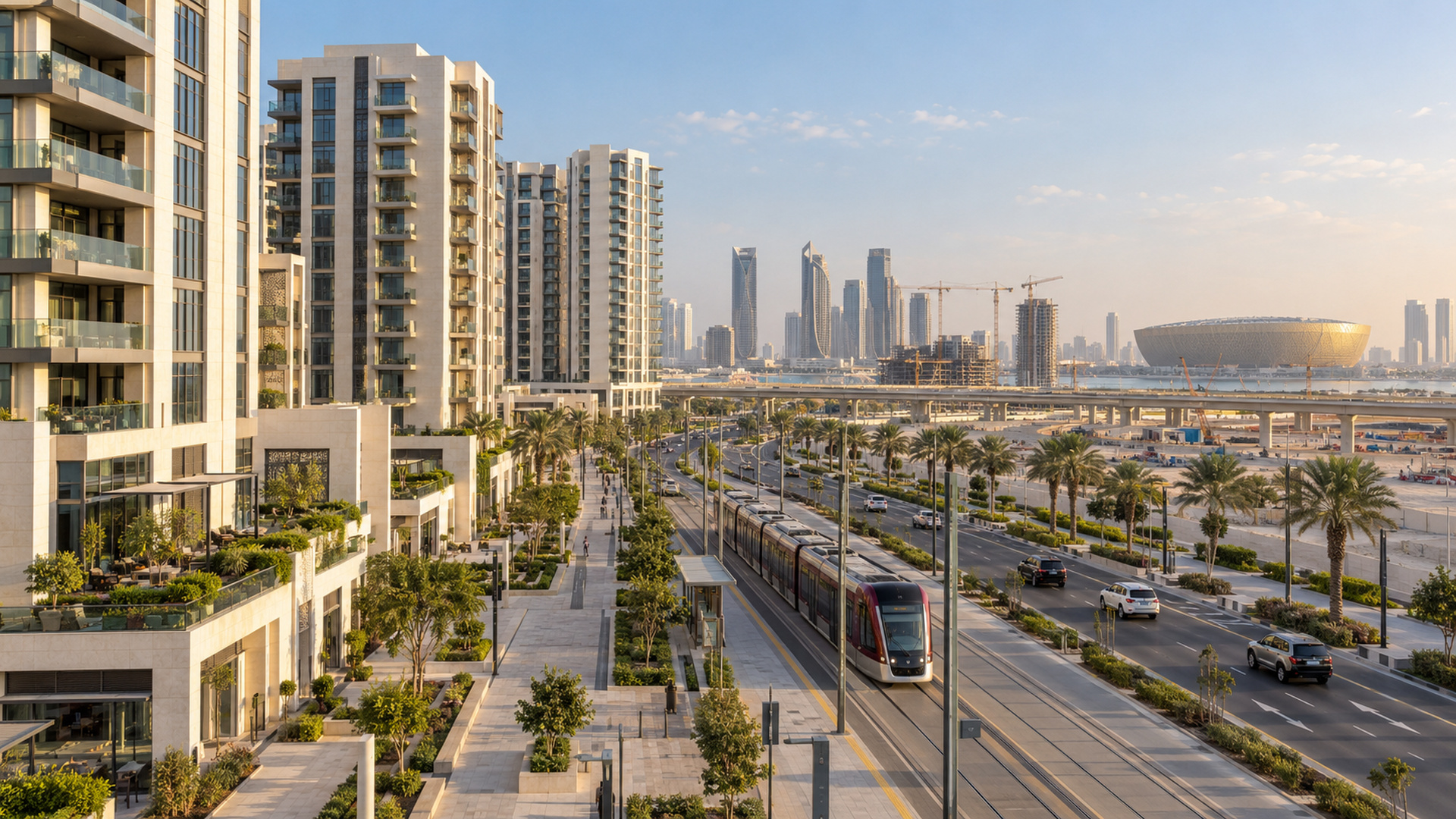
Several areas illustrate how infrastructure and real estate can develop together, but they represent different investment profiles.
Lusail and the northern corridor
Lusail provides one of the clearest examples of integrated urban infrastructure supporting a large-scale property market.
Ashghal’s Lusail Expressway connects Doha and Lusail and provides access to The Pearl, Katara, the Diplomatic Area, residential districts, hotels, and commercial facilities. The project includes multiple interchanges and four lanes in each direction.
The wider northern road network also connects Lusail, The Pearl, Legtaifiya, Al Daayen, and other residential and economic areas. Ashghal has described Al Khor Road as a major connection between northeastern Qatar and Doha, while its associated infrastructure serves more than 20 residential areas.
For investors, this makes Lusail and nearby districts worth evaluating when the property benefits from multiple transport connections rather than relying on one road alone.
Al Daayen and emerging northern districts
Al Daayen deserves attention because infrastructure development is expanding alongside active property transactions.
In July 2026, Al Daayen recorded QAR 230.3 million in real estate transaction value and accounted for 18% of Qatar’s registered real estate transaction count for the month, according to the Ministry of Justice.
Ashghal is also progressing infrastructure planning in areas such as Al Kheesa. One current project covers approximately 184 hectares and includes 25.5 km of major roads intended to connect subdivision areas with surrounding roads and expressways.
That combination is important. Investors should look for locations where infrastructure is improving while actual property transactions and development activity are already occurring.
Airport and port corridors
Infrastructure investment also creates opportunities outside traditional residential hotspots.
Ras Bufontas is positioned about 6 km from Hamad International Airport, while Umm Alhoul is located near Hamad Port. Invest Qatar identifies these zones for activities including logistics, manufacturing, technology, maritime industries, and distribution.
Hamad International Airport’s latest expansion increased annual passenger capacity to more than 65 million with the opening of Concourses D and E.
For property investors, these infrastructure assets are particularly relevant to commercial, logistics, hospitality, employee accommodation, and business-oriented residential demand.
Does buying close to infrastructure always mean higher returns?
No. A property beside a major road or planned station can underperform if surrounding supply grows faster than demand or if the infrastructure creates noise, congestion, construction disruption, or poor pedestrian conditions.
A useful distinction is:
Positive proximity:
Easy access to transport, employment, retail, schools, services, and major roads.
Negative proximity:
Direct exposure to heavy traffic, noise, construction activity, industrial operations, or difficult pedestrian access.
This is why FGREALTY evaluates infrastructure at the property level, rather than treating an entire district as equally attractive.
Before purchasing, compare the actual building’s location with:
- The nearest transport connection
- Main road access
- Employment centers
- Retail and daily services
- Schools and healthcare
- Existing and planned competing properties
- Parking and pedestrian access
- Construction activity around the building
What should investors check before buying near a major project?
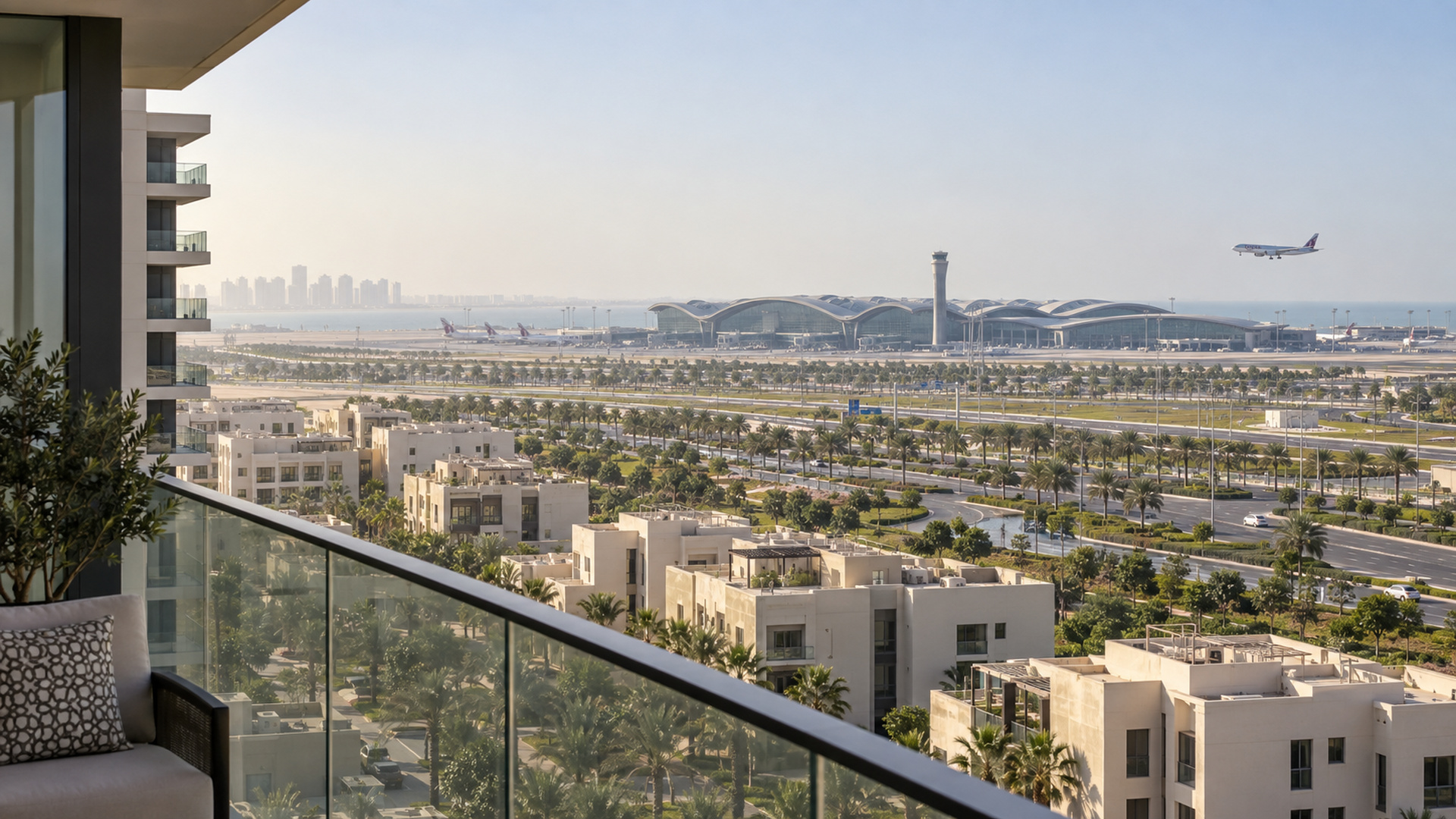
The infrastructure story should be verified before it becomes part of an investment calculation.
Confirm what is actually happening
Check whether the project is:
- Operational
- Under construction
- Awarded or tendered
- Planned
- Still subject to future changes
Do not value a property as though a proposed project is already complete.
Measure real accessibility
“Near” is not an investment metric. Measure the actual route from the property to the relevant road, station, business district, airport, port, school, or retail destination.
A property that is two kilometers away but has direct access may be more practical than one that appears closer but sits behind major road barriers.
Check supply around the project
Infrastructure can encourage developers to build more. That can increase demand, but it can also increase competing inventory.
Compare:
- Existing units
- New launches
- Future developments
- Rental stock
- Commercial supply
- Expected tenant profile
Verify foreign ownership eligibility
International buyers should also confirm whether the specific property falls within Qatar’s designated freehold or usufruct areas. The Ministry of Justice states that non-Qataris can own property in designated areas, with real estate residency available from QAR 730,000, subject to the applicable requirements. Property valued at QAR 3.65 million or more can qualify for additional residency benefits, including healthcare, education, and investment benefits, subject to the rules and a minimum 90-day annual residence requirement.
These thresholds relate to residency eligibility, not guaranteed investment returns.
Is Infrastructure More Important for Residential or Commercial Property?
Infrastructure can benefit both, but the mechanism differs.
Residential investors should focus on commuting convenience, schools, retail, public transport, road access, and the quality of the surrounding community.
Commercial investors should place greater weight on customer access, employee commuting, logistics, visibility, parking, and proximity to business clusters.
For example, airport and port connectivity may be particularly relevant to logistics and business users, while integrated road and transit networks can have a stronger effect on residential tenant decisions.
How FGREALTY can help
Infrastructure-led property decisions require more than searching for a property close to a major road or transport project.
FGREALTY can help investors compare verified listings, communities, property types, location connectivity, ownership eligibility, and investment objectives before shortlisting properties. For international buyers, the process can also include guidance around property selection, documentation, viewing coordination, relocation requirements, and the purchase process.
For commercial buyers and business owners, the assessment can extend to accessibility, business districts, logistics connectivity, and the suitability of the property for its intended use.
The goal is simple: identify whether the infrastructure creates a genuine advantage for that specific property, rather than assuming every property in the surrounding area will benefit equally. Contact FGREALTY agents to visit the best commercial and residential properties in Qatar near the major infrastructure projects.
FAQs
Q: What is transit-oriented development in Qatar?
A: Transit-oriented development places housing, workplaces, retail, and community facilities around efficient transport connections. Qatar’s national planning framework specifically promotes transit-oriented and mixed-use centers as part of its wider urban development strategy.
Q: Can infrastructure affect rental demand?
A: Yes. Better connectivity can make a property more convenient for employees, families, and businesses. The effect depends on the property’s tenant profile, competing supply, accessibility, and the quality of nearby services.
Q: Should I buy before infrastructure construction starts?
A: Not automatically. Early investment can provide access to developing locations, but it carries execution and timing risk. Investors should confirm the project’s official status and ensure the property has a viable investment case even without the future improvement.
Q: Which infrastructure matters most for commercial property?
A: Road connectivity, logistics networks, airports, ports, employment clusters, parking, and customer accessibility can be particularly important. The right combination depends on the property’s intended commercial activity.
Q: Does Qatar’s infrastructure strategy include suburban areas?
A: Yes. Ashghal’s Local Areas Infrastructure Programme covers central and suburban areas as well as new districts, including roads, drainage, utilities, and connecting infrastructure.
Q: Can foreign investors buy any property near an infrastructure project?
A: No. Foreign ownership depends on the property’s location and applicable ownership rules. The Ministry of Justice identifies specific freehold and usufruct areas and provides separate requirements for non-Qatari ownership and real estate residency.