Industrial and Logistics Real Estate in Qatar: Why More Investors Are Looking Beyond Traditional Commercial Assets
Key Takeaways
- Qatar’s transportation and storage sector contributed approximately US$9.9 billion to GDP, highlighting the importance of logistics to the national economy.
- Hamad Port has an annual handling capacity of 7.5 million TEUs, supporting regional trade and industrial growth.
- Ras Bufontas and Umm Alhoul Free Zones provide direct access to Hamad International Airport and Hamad Port for logistics businesses.
- Industrial property demand increasingly comes from logistics providers, manufacturers, distributors, healthcare companies, and e-commerce businesses.
- Modern warehouse specifications and strategic locations often influence leasing decisions more than rental cost alone.
- Working with a commercial brokerage familiar with Qatar’s industrial market helps investors identify assets aligned with long-term business demand.
Introduction
If you’re considering industrial or logistics real estate in Qatar, the opportunity is supported by more than market sentiment. Government investment, expanding trade infrastructure, and economic diversification have created measurable demand for warehouses, logistics facilities, distribution centers, and industrial land.
For investors, the key question is no longer whether Qatar is investing in logistics. It is where demand is concentrating, which property types businesses are leasing, and how infrastructure projects translate into long-term commercial value.
How Does Industrial Real Estate Fit Into Qatar’s Economy?
Industrial and logistics real estate benefits from sectors that the government continues to prioritize as part of economic diversification.
According to Invest Qatar, transportation and storage activities contributed approximately US$9.9 billion to Qatar’s GDP, demonstrating the scale of the logistics sector within the national economy. Invest Qatar also identifies logistics and transportation as one of the country’s priority investment sectors.
For property investors, this matters because demand for industrial space follows business activity rather than residential population growth alone.
Why logistics matters for commercial property
Businesses operating in logistics typically require:
- Warehouses
- Distribution centers
- Cold storage facilities
- Light industrial buildings
- Truck yards
- Last mile delivery hubs
As more companies establish regional operations in Qatar, demand extends beyond office buildings into specialized industrial assets.
Why Is Qatar’s Infrastructure Supporting Industrial Property Demand?
Industrial real estate performs best where infrastructure reduces operating costs and improves supply chain efficiency. Qatar has invested heavily in transport infrastructure that directly supports logistics businesses.
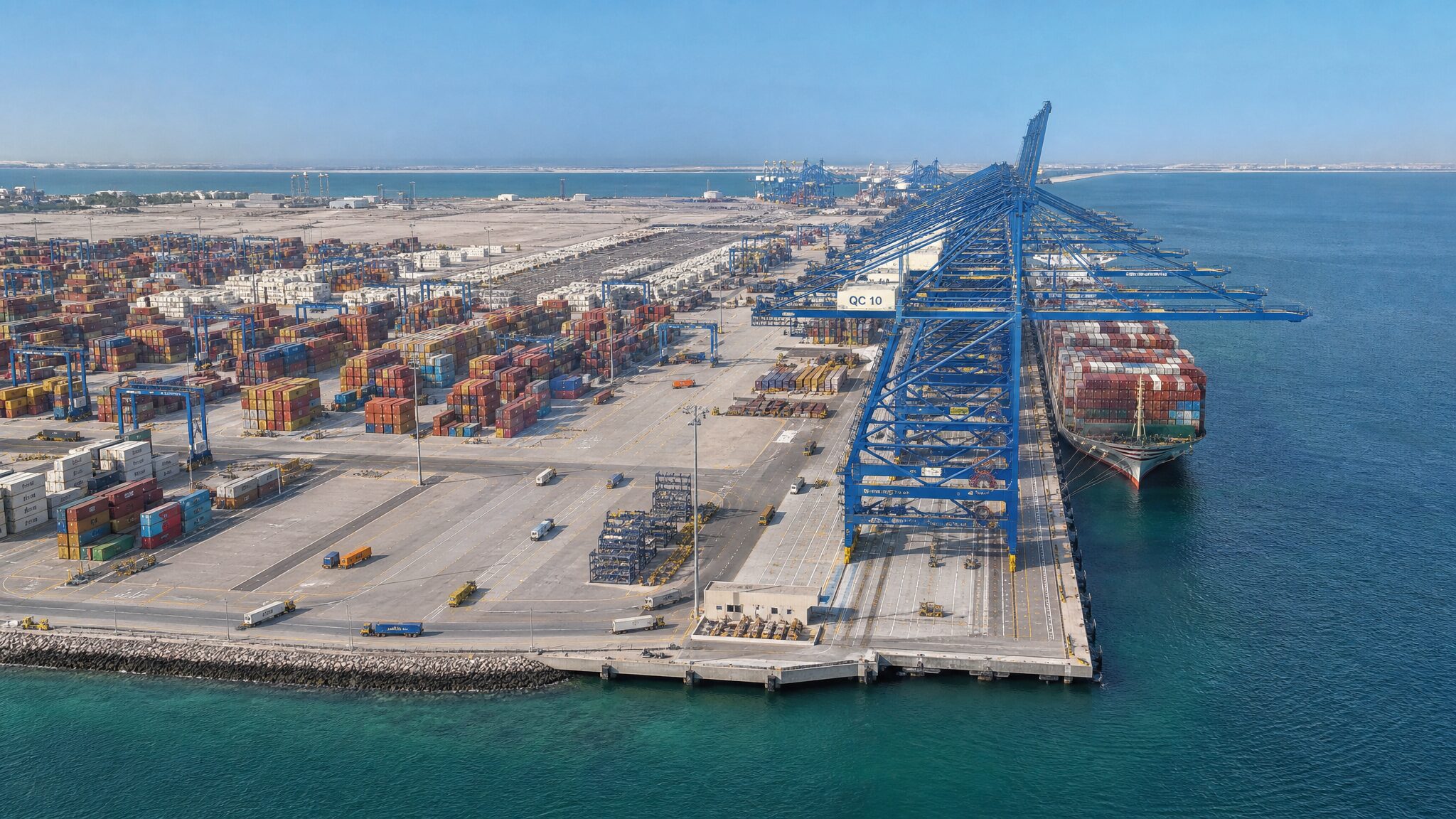
Hamad Port
According to Invest Qatar, Hamad Port has an annual capacity of 7.5 million TEUs, handles approximately 1.7 million tonnes of general cargo, and serves as Qatar’s primary maritime gateway. The port spans approximately 28.5 square kilometers and connects international shipping routes across Asia, Europe, and Africa.
For warehouse operators, this reduces freight handling time and improves regional distribution capabilities.
Hamad International Airport
Air freight is equally important for industries requiring rapid delivery.
Invest Qatar identifies Hamad International Airport alongside Qatar Airways Cargo as one of the country’s competitive advantages for international logistics. Airport expansion plans continue increasing passenger capacity while strengthening cargo operations that support pharmaceutical, healthcare, and high-value supply chains.
Together, Hamad Port and Hamad International Airport provide businesses with multimodal logistics options that few regional markets can match.
Which Locations Are Driving Industrial Growth?
Location determines whether an industrial property remains competitive over time.
Rather than focusing only on traditional industrial districts, many businesses prioritize areas offering direct connections to ports, airports, and highways.
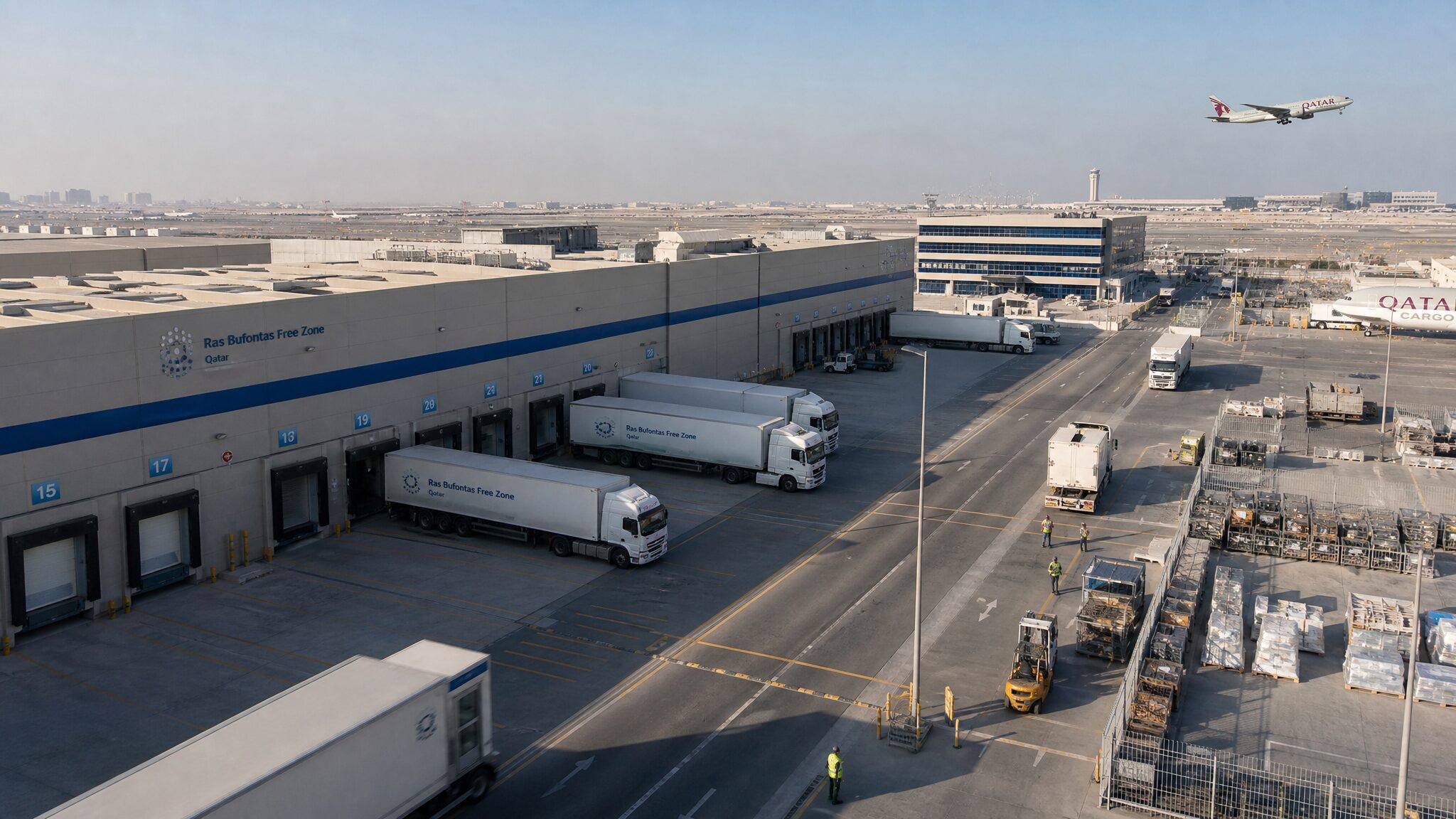
Ras Bufontas Free Zone
Located adjacent to Hamad International Airport, Ras Bufontas Free Zone supports businesses handling time-sensitive, technology, pharmaceutical, and high-value products.
According to the Qatar Free Zones Authority, its proximity to the airport reduces transportation time while supporting warehousing, fulfillment, and international distribution.
Umm Alhoul Free Zone
Umm Alhoul Free Zone sits beside Hamad Port and focuses on manufacturing, heavy industry, logistics, and maritime businesses.
The Qatar Free Zones Authority highlights direct access to Hamad Port as a competitive advantage for freight forwarding, export processing, automotive logistics, and industrial manufacturing.
For investors, these locations typically attract businesses that require long-term operational facilities rather than short-term commercial leases.
Why Are Businesses Leasing Modern Warehouses Instead of Older Facilities?
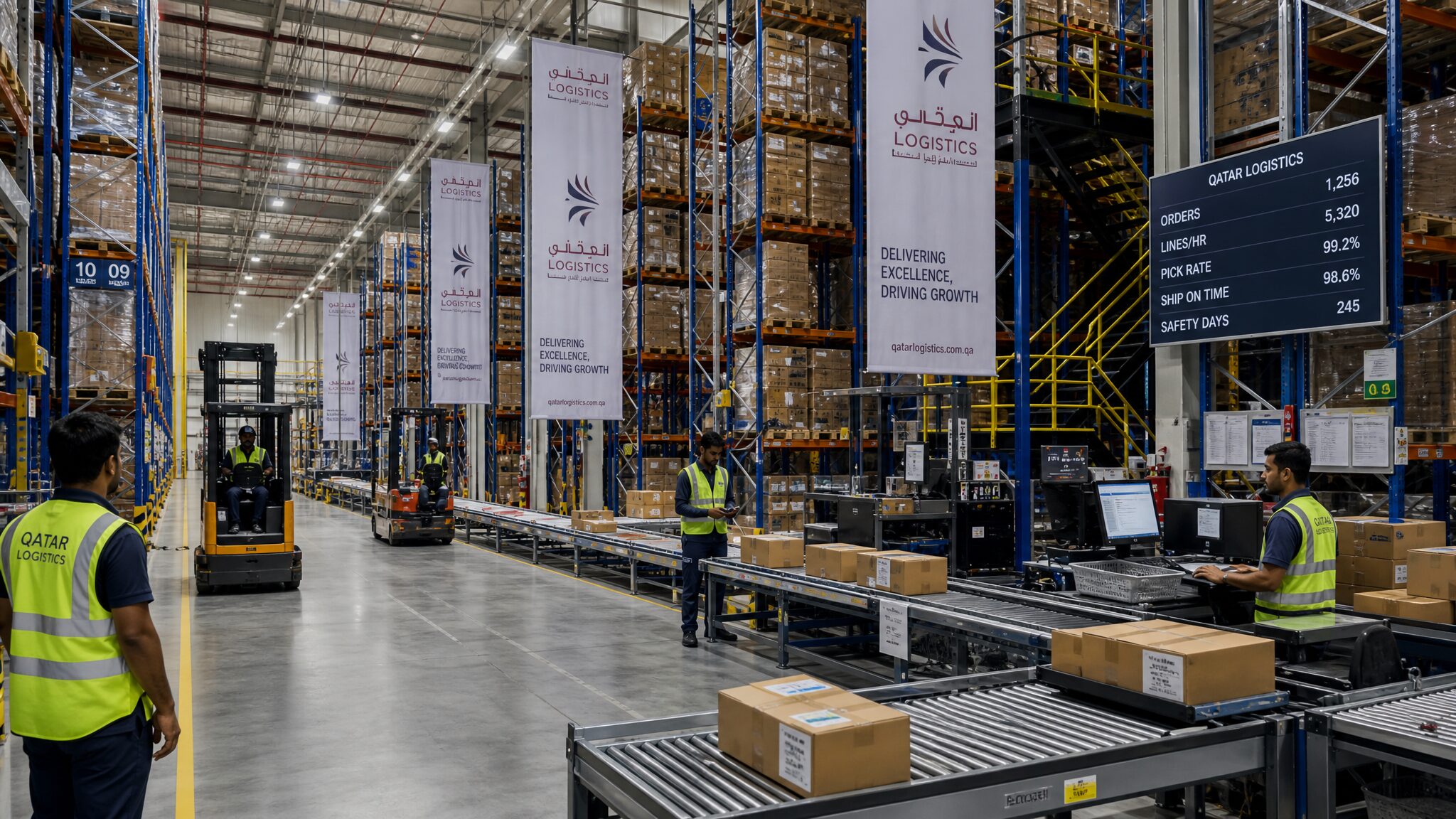
Businesses increasingly compare warehouse specifications before comparing rental prices.
At FGREALTY, commercial clients commonly evaluate:
- Clear ceiling height
- Loading dock configuration
- Truck maneuvering space
- Highway accessibility
- Fire safety systems
- Cold storage capability
- Expansion potential
Modern logistics operations often prioritize operational efficiency because transportation costs and turnaround times have a greater impact on profitability than rent alone.
What Should Investors Evaluate Before Buying Industrial Property?
Industrial real estate delivers the strongest long-term value when it aligns with business demand, infrastructure, and regulatory requirements rather than land size alone.
Investors should assess both the physical asset and the surrounding logistics ecosystem before making a purchase.
Key factors to evaluate
Before investing, consider:
- Proximity to Hamad Port, Hamad International Airport, or major highways
- Warehouse specifications, including ceiling height and loading bays
- Availability of utilities and road infrastructure
- Future expansion potential
- Tenant demand within the surrounding industrial cluster
- Ownership structure and applicable regulations
- Accessibility for heavy vehicles and freight transport
Are Industrial Properties Suitable for International Investors?
Industrial assets can be attractive for investors seeking commercial exposure, but ownership opportunities depend on Qatar’s regulations and the property’s location.
Foreign investors should verify ownership rights, licensing requirements, and permitted commercial activities before proceeding with any purchase. Regulations may differ depending on whether the property is located within designated investment areas or free zones in Qatar.
Why due diligence matters
Before committing to an investment:
- Confirm ownership eligibility through the relevant authorities.
- Review zoning and permitted business activities.
- Understand lease structures if purchasing an income-generating asset.
- Verify utility access and infrastructure availability.
- Work with licensed legal and real estate professionals.
These steps reduce risk and ensure the property supports both operational and investment objectives.
Common Misconceptions About Industrial Real Estate
Many investors assume industrial properties are limited to factories or heavy manufacturing.
In reality, today’s industrial market supports a broad range of businesses driven by modern supply chains and consumer demand.
Industrial properties now serve:
- E-commerce fulfillment centers
- Cold storage facilities
- Food distribution companies
- Pharmaceutical logistics
- Construction suppliers
- Manufacturing businesses
- Automotive storage
- Third-party logistics providers
As supply chains become more specialized, businesses increasingly require facilities designed for their operational needs rather than generic warehouse space.
How FGREALTY Can Help
Industrial real estate requires market knowledge beyond standard commercial transactions.
FGREALTY helps investors and businesses identify properties that match operational requirements, investment objectives, and long-term growth plans.
Our commercial advisory services include:
- Verified industrial and warehouse listings
- Commercial property sourcing
- Location analysis across Qatar’s key business districts
- Investment guidance based on current market conditions
- Assistance throughout the buying and leasing process
- Support for local and international investors seeking suitable commercial assets
Whether you are expanding a logistics operation, acquiring a warehouse, or exploring commercial investment opportunities, FGREALTY agents provide practical guidance backed by local market expertise.
FAQs
Q: Can businesses lease industrial property inside Qatar Free Zones?
A: Yes. Businesses approved by the Qatar Free Zones Authority can lease industrial and logistics facilities within free zones such as Ras Bufontas and Umm Alhoul, subject to QFZ regulations and licensing requirements.
Q: Which industries are prioritized for investment in Qatar’s logistics sector?
A: According to Invest Qatar, priority sectors include logistics, advanced manufacturing, pharmaceuticals, food security, technology, and supply chain services because they support Qatar’s economic diversification strategy.
Q: How does Hamad Port benefit warehouse investors?
A: Hamad Port connects Qatar to international shipping routes across Asia, Europe, and Africa, helping businesses reduce transit times and improve import and export efficiency, which increases the appeal of nearby industrial properties.
Q: Are build-to-suit warehouses available in Qatar?
A: Yes. Many industrial developments offer build-to-suit facilities, allowing businesses to customize warehouse layouts, storage capacity, loading areas, and operational specifications based on their logistics requirements.
Q: What documents should investors review before acquiring industrial property?
A: Investors should verify ownership eligibility, land use classification, title documentation where applicable, zoning approvals, and any licensing requirements with the relevant Qatari authorities before completing a transaction.