What Property Investors Should Know About Vacancy Risk In Qatar

Key Takeaways
- Vacancy risk means the possibility of a property remaining unoccupied between tenants or taking longer to lease.
- Qatar does not publish one reliable national residential vacancy rate, so investors need to assess several indicators together.
- More available properties can increase competition between landlords, especially when similar units target the same tenant group.
- Location, property type, condition, pricing, furnishings, and building amenities can influence how easily a property attracts tenants.
- FGREALTY’s average days listed fell from 123.3 days in 2025 to 51.5 days in 2026 YTD, suggesting that listing supply alone does not prove high vacancy.
- Investors should assess realistic rent, expected occupancy, service charges, and holding costs before buying.
What Is Vacancy Risk In Qatar Property Investment?
Vacancy risk is the possibility that an investment property remains unoccupied for a period between tenants, reducing rental income while ownership costs continue. In Qatar, investors should not judge this risk from a single vacancy percentage because a comprehensive national residential vacancy rate is not published in the official sources reviewed.
Instead, vacancy risk is better assessed through several measurable signals: available competing properties, rental prices, transaction activity, time on market, location, property type, and tenant demand. This approach is particularly important in Qatar’s apartment-heavy investment markets, where multiple buildings can offer similar units to the same tenant pool.
How Much Competition Exists For Rental Properties?
Supply competition is one of the clearest factors investors should monitor. More properties competing for the same tenants can give renters more choice and put pressure on landlords to price accurately or improve the property’s appeal.
FGREALTY’s internal data provides a useful example. Active listings increased from 2,068 on August 27, 2025, to 3,104 on August 27, 2026, a 50.1% increase. This is FGREALTY inventory data, not a national Qatar vacancy measure, but it shows why investors should consider competing supply when evaluating individual properties.
The important question is therefore not simply, “How many properties are vacant?” It is:
How many comparable properties are competing for the tenants I want?
Does More Supply Always Mean Higher Vacancy?
No. A larger number of available properties can increase competition, but supply alone does not establish that properties are sitting empty. Investors need to compare supply with evidence of leasing activity and the time properties spend on the market.
FGREALTY’s internal data illustrates this distinction. Its median monthly apartment rent was QAR 8,500 in 2026 YTD, compared with QAR 9,000 in 2024. At the same time, FGREALTY recorded 306 rental deals in 2026 YTD versus 279 during the comparable 2025 period, an increase of 9.7%.
This combination suggests that additional inventory and active tenant demand can coexist. Investors should therefore avoid assuming that rising listings automatically mean a weak rental market.
Which Qatar Locations Can Reduce Vacancy Risk?

Location can influence vacancy risk because tenants do not choose properties based on price alone. Access to employment centers, transportation, retail, schools, services, waterfront areas, and community amenities can affect the depth of the potential tenant pool.
The Pearl and Lusail illustrate why community scale matters. The Pearl currently reports 52,000 residents, 25,000 residential units, 370 operational retail and F&B brands, and 34 million annual visitors. Lusail, meanwhile, is planned for more than 200,000 residents, around 170,000 workers and 80,000 visitors when fully developed.
These figures do not guarantee occupancy for every property. They show that established or comprehensively planned communities can offer a broad base of residents, workers and visitors, which investors can consider when assessing tenant demand.
Which Property Features Matter For Vacancy Risk?
Properties with broad tenant appeal can have an advantage when competing listings offer similar prices. Investors should evaluate the complete rental proposition rather than focusing only on the purchase price.
Important factors include:
- Efficient layouts and practical bedroom configurations
- Parking availability
- Furnished versus unfurnished positioning
- Building maintenance and common areas
- Views and outdoor space
- Access to transport and major roads
- Proximity to retail, restaurants and daily services
- Building amenities
- Service charges relative to competing properties
- Asking rent compared with similar available units
For example, a two-bedroom apartment with parking, a practical layout, and well-maintained amenities may compete differently from another two-bedroom apartment at the same asking rent but with weaker building facilities.
How Does Pricing Affect Vacancy?
Pricing is one of the factors an owner can control most directly. An investor who sets rent above comparable properties may increase the time needed to secure a tenant, while pricing significantly below the market can reduce income unnecessarily.
The better approach is to compare the property against genuinely comparable units in the same building or immediate submarket. Look at size, furnishing, condition, floor, view, parking, amenities and current asking rents before setting an expected rental figure.
Qatar’s National Planning Council also tracks housing-related costs through the Consumer Price Index. In July 2026, the Housing, Water, Electricity, Gas and Other Fuels group declined 0.64% month over month, showing why investors should distinguish broader housing cost movements from the rent achievable for a specific property.
How Should Investors Calculate Vacancy In Their Returns?
Investors should build vacancy into their financial model instead of assuming twelve months of rent every year. A simple approach is to calculate projected rental income using a conservative occupancy assumption and then deduct recurring costs.
For example, if a property could generate QAR 8,500 per month, twelve months of theoretical rent would equal QAR 102,000. But an investor should also model periods without a tenant, leasing costs, service charges, maintenance, furnishing replacement, and other ownership expenses before deciding whether the purchase works financially.
The key figure is not the advertised rent. It is the net income the property can realistically generate after vacancies and recurring costs.
What Should Investors Check Before Buying?
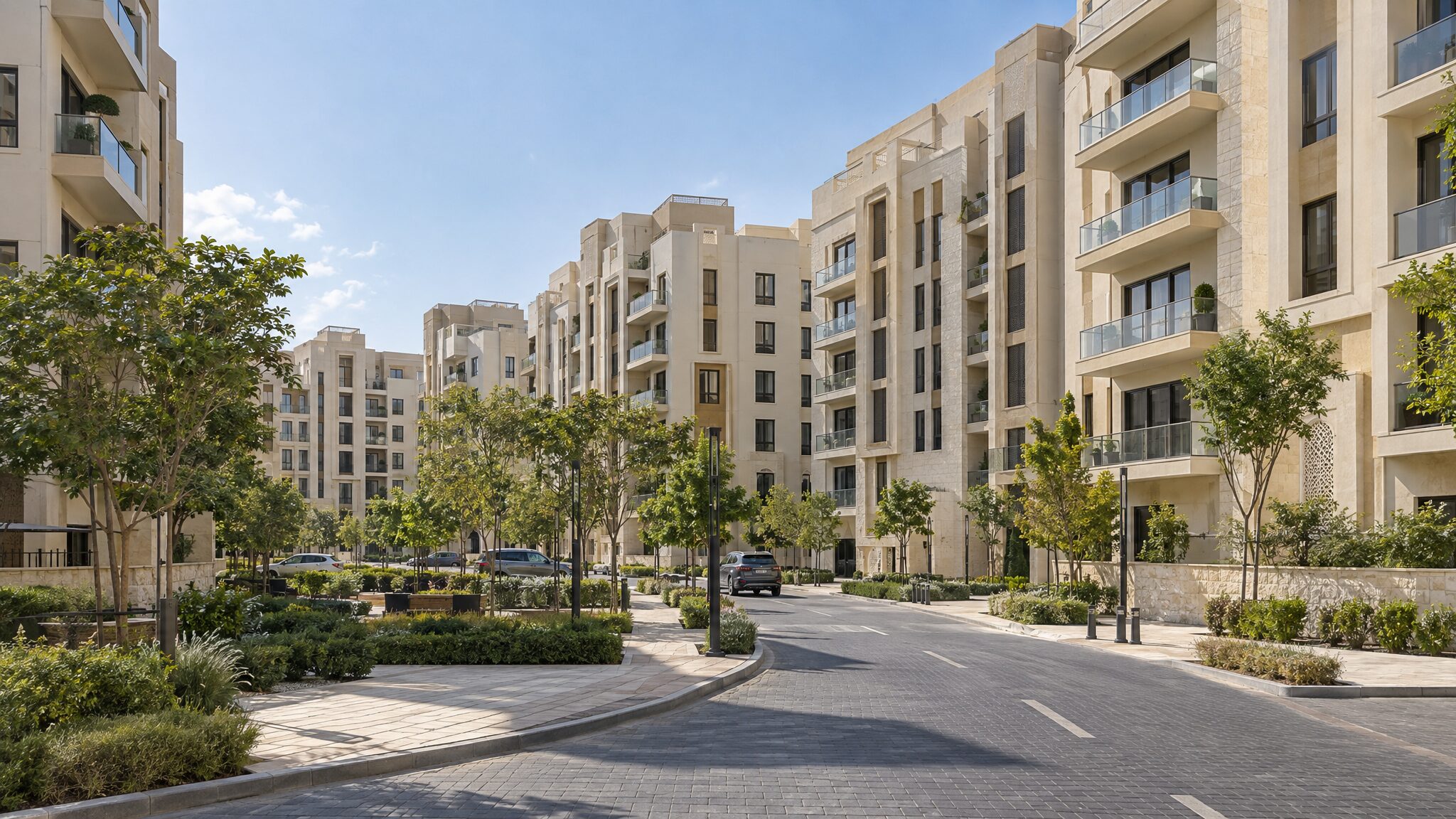
Investors can reduce uncertainty by testing the property against real competing listings rather than relying on a projected rental yield alone.
Use this checklist:
- Identify at least several comparable available properties.
- Compare actual size, layout, and amenities.
- Ask how quickly comparable units are being leased.
- Review service charges and recurring ownership costs.
- Determine whether furnished or unfurnished units dominate the local tenant market.
- Model a vacancy period before calculating returns.
- Consider whether the property appeals to more than one tenant segment.
- Review the property’s location relative to employment, transport and daily services.
How FGREALTY Can Help
FGREALTY can help investors assess vacancy risk at the property and community level rather than relying on a single market statistic. The brokerage can compare verified listings, current competing inventory, property types, asking rents, and location factors before a buyer commits capital.
For international investors, the process can also include area selection, investment guidance, ownership considerations, and transaction support. Expats and relocating buyers can use the same market comparisons to identify properties that fit their lifestyle and rental objectives.
Commercial investors can apply a similar approach by assessing tenant demand, competing commercial inventory, accessibility, and the suitability of the location for the intended business activity.
Connect with FGREALTY agents today and book a viewing of properties for rent in Qatar.
FAQs
Q: Is a high rental yield enough to justify a property investment?
A: No. A high projected yield can become much lower if the property spends significant time without a tenant or carries high recurring costs. Investors should calculate net income after vacancy, service charges, maintenance, and other expenses.
Q: Can a new building have higher vacancy risk than an older one?
A: It can, depending on how much competing inventory enters the same submarket at the same time. A new building may offer stronger amenities, but investors should compare its pricing and tenant appeal with existing properties nearby.
Q: Should investors prefer furnished or unfurnished properties?
A: Neither option is automatically safer. The better choice depends on the tenant profile, location, building, and competing inventory. Investors should examine which format attracts demand for the specific property rather than assume one produces better occupancy.
Q: Does a lower purchase price reduce vacancy risk?
A: Not necessarily. A cheaper property can still face weak demand if its location, layout, condition, or building quality limits its tenant pool. Purchase price and vacancy risk should be assessed separately.
Q: Can vacancy risk affect property resale?
A: Potentially. A property that consistently struggles to attract tenants may also face a narrower investor audience, particularly when buyers value rental income. This is why investors should assess both rental demand and potential resale demand before purchasing.