After the Binance Hack, Why Investors Own Qatar Property
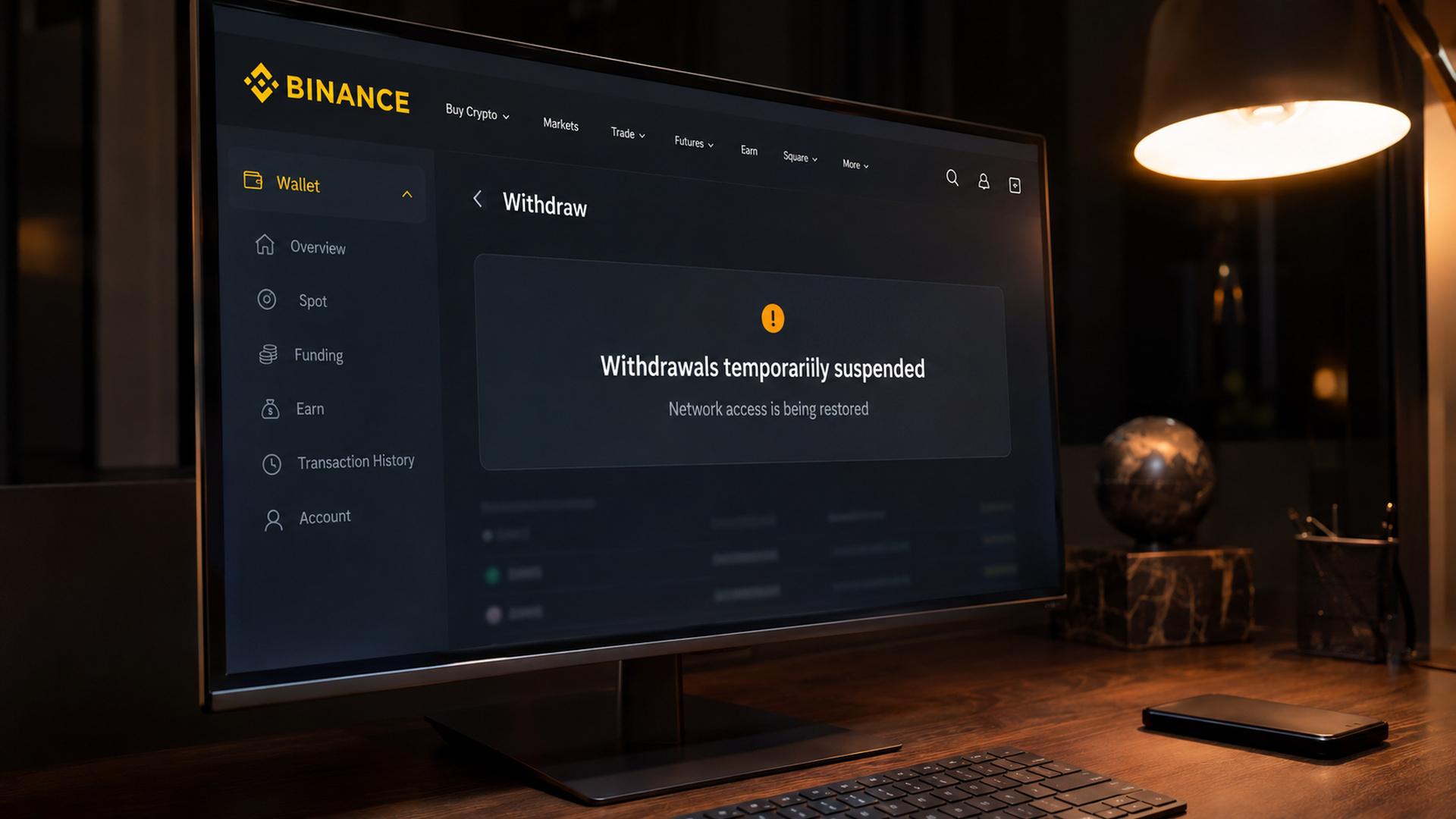
At around 20:05 UTC on October 29, 2026, Binance’s hot wallets were compromised. By the exchange’s own count, about $6.3 billion in token assets left its control. Blockchain intelligence firm TRM Labs traced roughly $6.36 billion moving across ten blockchains, most of it in about 20 minutes.
Binance customers were ultimately made whole, because Binance chose to pay. That is the detail worth sitting with. An exchange balance is a claim on someone else’s systems, and when those systems fail, your access depends on decisions you don’t control. A property title registered in your name works differently, and that difference is what this article is about.
Twenty Minutes to Drain, Two Weeks to Recover
The sequence below comes from Binance’s own recovery updates and TRM Labs’ on-chain analysis.
| Date (2026) | What happened | Source |
| Nov 14 | Withdrawals reopened on 87 networks during the week; remaining networks targeted by the following week | Binance recovery update |
| Nov 12–13 | Binance says coverage of all affected assets is complete and publishes a new proof-of-reserves snapshot | Binance announcement |
| Nov 1 | Phase one of withdrawals resumes; about 95% of the impacted amount covered | Binance Recovery Update #4 |
| Oct 30 | Binance confirms hot wallets were compromised, with losses of about $6.3 billion | Binance Recovery Update #2 |
| Oct 29 | About $6.36 billion moved out of Binance wallets on ten blockchains, mostly within about 20 minutes from 20:05 UTC | TRM Labs |
For roughly three days, customers could not withdraw at all. Full access across every network was still being restored more than two weeks after the theft.
Holding Is Not the Same as Owning
The Binance episode was not a story about crypto prices. It was a story about custody. Customers didn’t lose their balances, but for days they couldn’t move them, and the recovery rested on one company’s balance sheet and goodwill.
Sophisticated investors already know this risk exists. What changes with events like this is how much weight they give it. When a meaningful share of your net worth sits behind a login, preservation starts to matter as much as growth.
Real estate answers that concern in a specific way. In Qatar, the Ministry of Justice’s Real Estate Registration Department registers a freehold purchase, and the title sits in the owner’s name. The government’s ownership manual states that a freehold owner can sell, mortgage, rent, and pass the property on by inheritance. No platform has to stay online for that right to exist.
Why Qatar Belongs on the Shortlist
For a global investor weighing where to hold physical assets, Qatar offers a defined legal route for foreign ownership and a regulator that publishes its rules.
A Clear Ownership Framework
Cabinet Decision No. 28 of 2020, amended by Cabinet Decision No. 21 of 2026, designates the areas where non-Qataris may own freehold property. They include The Pearl Island, Lusail, and West Bay (Legtaifiya). Registration costs are modest: the government’s ownership manual sets the sale registration fee at 0.25% of the property’s value.
Ownership That Can Come With Residency
Aqarat, Qatar’s real estate regulator, links property ownership to residence:
- QAR 730,000 or more: a residence permit without a sponsor.
- QAR 3,650,000 or more: a residence permit with privileges similar to permanent residency, including healthcare, education, and investment.
Both require the owner to live in Qatar at least 90 days a year. For an investor diversifying away from digital assets, that turns a capital allocation into a potential second base.
A Market With Recorded Depth
Aqarat reports that sale transactions rose from 3,804 in 2016 to 7,846 in 2025, the highest level in that period, based on Ministry of Justice data. Vacant land, villas, and apartments made up 93.6% of 2025 sales. Those are registered deals, not listings.
What Property Won’t Do for You
Real estate is not risk-free, and a broker who tells you otherwise isn’t doing their job. It trades one set of risks for another.
- It is slow to sell. A Binance withdrawal took days to restore; a property sale can take weeks or months to complete.
- Prices move both ways. Qatar Central Bank publishes a monthly Real Estate Price Index for exactly this reason. Check its history before assuming steady growth.
- Ownership has conditions. Residency requires 90 days a year in Qatar. Aqarat notes that vacant land must be built on within four years of registration.
- Concentration still matters. One villa is one asset in one market. Moving all digital wealth into a single property simply swaps one concentration for another.
The point is balance, not replacement. Owning part of your wealth in a registered, income-capable asset changes your overall risk profile. It doesn’t eliminate risk.
A Practical Hurdle: Crypto and Qatar’s Banks
Investors often ask whether they can pay for Qatar property in crypto. In practice, plan on paying in fiat. Qatar Central Bank has prohibited banks and financial institutions from dealing in virtual assets since 2018. The Qatar Financial Centre Regulatory Authority classifies cryptocurrencies and stablecoins as excluded tokens under its 2024 digital assets framework.
That means conversion usually happens before the money reaches Qatar, through a regulated exchange and bank in another jurisdiction. Keep a clean record of how the assets were acquired and converted, because banks and transaction parties will expect to see where the funds came from.
Five Questions Before You Move Digital Wealth Into Doha Property
Work through these in order. If you can’t answer one, that is the step to resolve before you look at listings.
- What share of your wealth should be physical? Decide the allocation first, so the property serves the plan instead of becoming the plan.
- Can you document the funds? Have records showing how the digital assets were acquired and converted to fiat through a regulated channel outside Qatar.
- Is residency part of the goal? If so, check the QAR 730,000 or QAR 3,650,000 threshold against the property’s assessed value, and whether you can spend 90 days a year in Qatar.
- Is the unit inside a freehold zone? Confirm the exact plot or unit against the official map, not just the neighborhood name.
- What will the asset do while you hold it? Decide whether you need rental income, personal use, or both, since that changes the property type and location you should target.
Turning a Balance Into a Title Deed, With FGREALTY
Moving wealth from a screen into a deed involves more than choosing a property. It means understanding which zones qualify, how residency thresholds are assessed, and how a purchase is registered.
FGREALTY has worked in Qatar’s property market since 2017 under Real Estate Brokerage License No. 303, with listings across the freehold areas open to foreign buyers. For international investors, we can:
- Match properties to your allocation, whether you want rental income, a residence, or a long-term hold.
- Confirm that a unit sits inside a designated freehold zone before you commit.
- Explain how the QAR 730,000 and QAR 3,650,000 residency categories apply to a specific purchase.
- Coordinate with your bank, lawyer, and the registration process so the title ends up in your name.
If you are rethinking how much of your wealth should be held versus owned, speak to an FGREALTY agent about real estate opportunities in Qatar.
FAQs
Q: What is the difference between freehold and usufruct in Qatar?
A: Freehold is full ownership of the property, with the right to sell, mortgage, rent, and pass it on. Usufruct is a right to use and benefit from a property for up to 99 years, renewable, in a separate set of designated areas. Investors focused on preserving wealth usually prefer freehold.
Q: How long does a property-linked residence permit last?
A: Aqarat describes the permit for owners as valid for five years and renewable. The owner must spend at least 90 days a year in Qatar, either continuously or in separate stays.
Q: Can I rent out a property I buy in Qatar?
A: Yes. Aqarat confirms that owners may dispose of and lease their properties. Whether the property suits renting depends on its type, location, and service charges, so plan this before you buy.
Q: Is real estate a guaranteed way to preserve wealth?
A: No asset is guaranteed. Property values can fall, and selling takes time. What property offers is a different kind of risk: a registered, physical asset in your name, rather than a balance held by a third party.