The Qatari Riyal Dollar Peg: Currency Stability and Its Impact on Real Estate Decisions

Key Takeaways
- The Qatari Riyal has been pegged to the US dollar at a fixed rate of 3.64 since 2001, ensuring exchange rate stability according to the Qatar Central Bank.
- Currency stability reduces foreign exchange risk for international real estate investors.
- Stable exchange rates support predictable property pricing and rental income when measured in global currencies.
- Qatar Central Bank maintains strong foreign currency reserves to sustain the peg and financial stability.
- Global institutions recognize fixed exchange regimes in the Gulf as key contributors to macroeconomic stability.
Introduction: Why Currency Stability Matters in Real Estate Investment
For international investors, currency risk is one of the most critical but often overlooked factors when entering a real estate market. Fluctuations in exchange rates can directly impact returns, rental income, and capital value when converted into foreign currencies.
Qatar offers a distinct advantage through its long-standing currency peg to the US dollar. This monetary framework creates a stable financial environment where investors can assess property values and income streams without exposure to sudden currency volatility.
Understanding the Qatari Riyal Dollar Peg
Fixed Exchange Rate Framework
The Qatari Riyal is officially pegged to the US dollar at a rate of 3.64 QAR per USD, a policy maintained by Qatar Central Bank since 2001.
This fixed exchange rate system means that the value of the local currency does not fluctuate freely in international markets. Instead, it remains stable against the US dollar, which is the dominant global reserve currency.
For real estate investors, this creates a transparent pricing environment where property values remain consistent when viewed in dollar terms.
Central Bank Support and Monetary Policy
Qatar Central Bank plays a central role in maintaining the peg by managing interest rates, liquidity, and foreign exchange reserves. According to official financial disclosures, Qatar maintains strong reserve buffers that allow it to defend the currency peg during periods of global financial stress.
This institutional backing ensures that the peg is not only stable in theory but supported by measurable financial strength.
How Currency Stability Impacts Real Estate Decisions

Reduced Foreign Exchange Risk
One of the primary concerns for international buyers is the risk of currency depreciation affecting returns. In markets with floating exchange rates, investors may face losses if the local currency weakens against their home currency.
Qatar’s fixed exchange system eliminates this uncertainty. Investors can calculate returns, rental yields, and resale value with confidence that exchange rates will remain stable.
Predictable Rental Income
Rental income in Qatar is typically denominated in Qatari Riyals, which effectively aligns with the US dollar value due to the peg. This means that landlords receiving rental income benefit from consistent earnings when converted into dollars or other major currencies.
For investors analyzing yield performance, this predictability is a significant advantage compared to more volatile markets.
Stable Property Valuation
Currency stability also supports consistent property valuations. In fluctuating currency environments, property prices may appear to rise or fall simply due to exchange rate movements rather than actual market fundamentals.
In Qatar, pricing trends more accurately reflect real demand, supply, and economic conditions rather than currency shifts.
Market Confidence and Global Positioning
Alignment with Global Financial Systems
By linking its currency to the US dollar, Qatar aligns its monetary system with global financial markets.
This facilitates international trade, investment flows, and cross-border transactions, making it easier for foreign investors to enter the real estate sector. Global financial institutions recognize currency pegs in the Gulf region as stabilizing mechanisms that support investment environments.
Investor Perception and Capital Flows
Currency stability plays a key role in shaping investor perception. Markets with predictable exchange rates are generally viewed as lower risk, particularly during periods of global uncertainty.
What This Means for Real Estate Investors
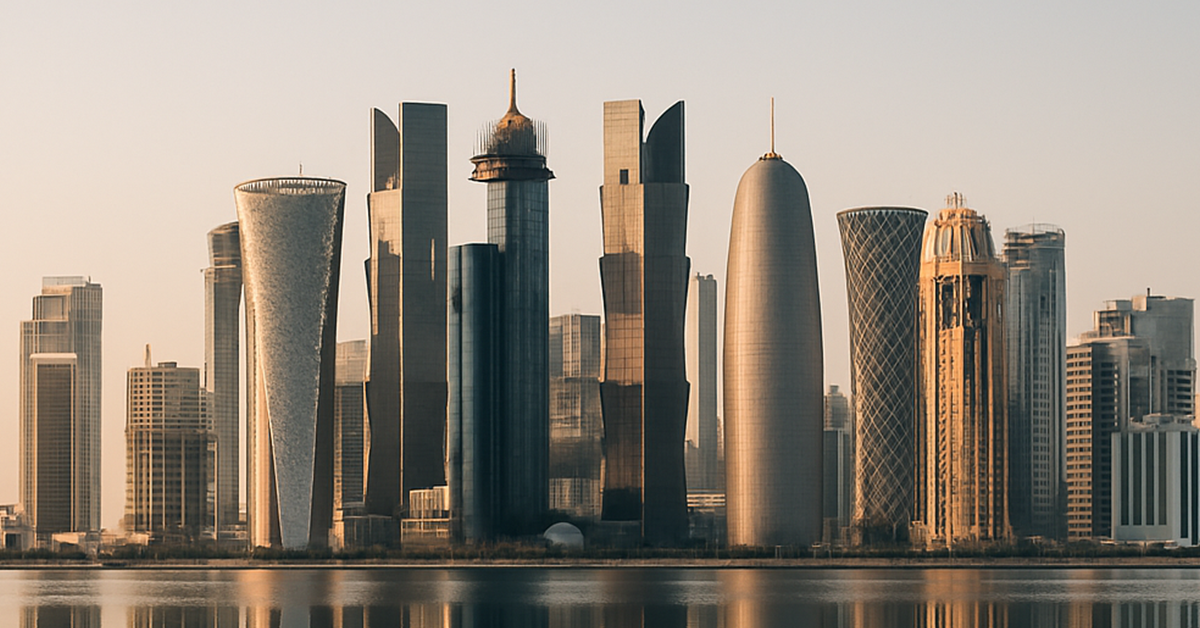
For global investors, the Qatari Riyal dollar peg offers a structural advantage that goes beyond short-term market cycles. It ensures that property investments are evaluated based on real market fundamentals rather than currency speculation.
Combined with regulated real estate frameworks and high-quality developments, currency stability reinforces Qatar’s position as a reliable destination for long term property investment.
How FGREALTY Supports Investors in Qatar
FGREALTY provides verified listings and expert guidance for clients exploring Qatar’s real estate market.
Whether you are searching for
FGREALTY agents help you understand currency implications, evaluate returns, and identify properties aligned with your investment strategy.
FAQs
Q: What is the exchange rate of the Qatari Riyal to the US dollar?
A: The Qatari Riyal is pegged at a fixed rate of 3.64 to 1 US dollar as maintained by the Qatar Central Bank.
Q: Why is a currency peg important for real estate investors?
A: It reduces exchange rate risk and ensures predictable returns when converting rental income or property value into foreign currencies.
Q: Is the Qatari Riyal peg stable?
A: Yes, the peg has been maintained since 2001 and is supported by strong foreign reserves and central bank policy.
Q: How does currency stability affect rental yields?
A: Stable currency ensures that rental income retains its value internationally, making yield calculations more reliable.