Dubai’s Real Estate Market Slows Amid Regional Tensions: What It Means for Gulf Investors and Qatar’s Property Outlook

Key Takeaways
- Recent data from the Dubai Land Department shows price moderation after a strong multi year growth cycle.
- Analysts highlight a shift from rapid price growth toward market stabilization.
- Regional uncertainty and global interest rate conditions are influencing investor sentiment across parts of the Middle East.
- Qatar’s market remains supported by long-term infrastructure planning under Qatar National Vision 2030.
- Regulated property systems through the Ministry of Justice in Qatar continue to support transparency and investor confidence.
Introduction: Understanding the Shift in Gulf Real Estate Markets
Global investors closely monitor Gulf real estate markets due to their connection with economic diversification, infrastructure investment, and international capital flows. Dubai has experienced significant property price growth over the past few years, supported by strong demand from international buyers, business migration, and post pandemic recovery.
Recent market reports now indicate a gradual slowdown in price growth. According to insights from the Dubai Land Department, transaction volumes remain active, but price increases are moderating as supply expands and the market moves toward a more balanced phase.
At the same time, investors evaluating regional opportunities are increasingly comparing market stability across Gulf countries, particularly between Dubai and Doha.
Why Dubai’s Real Estate Market Is Slowing
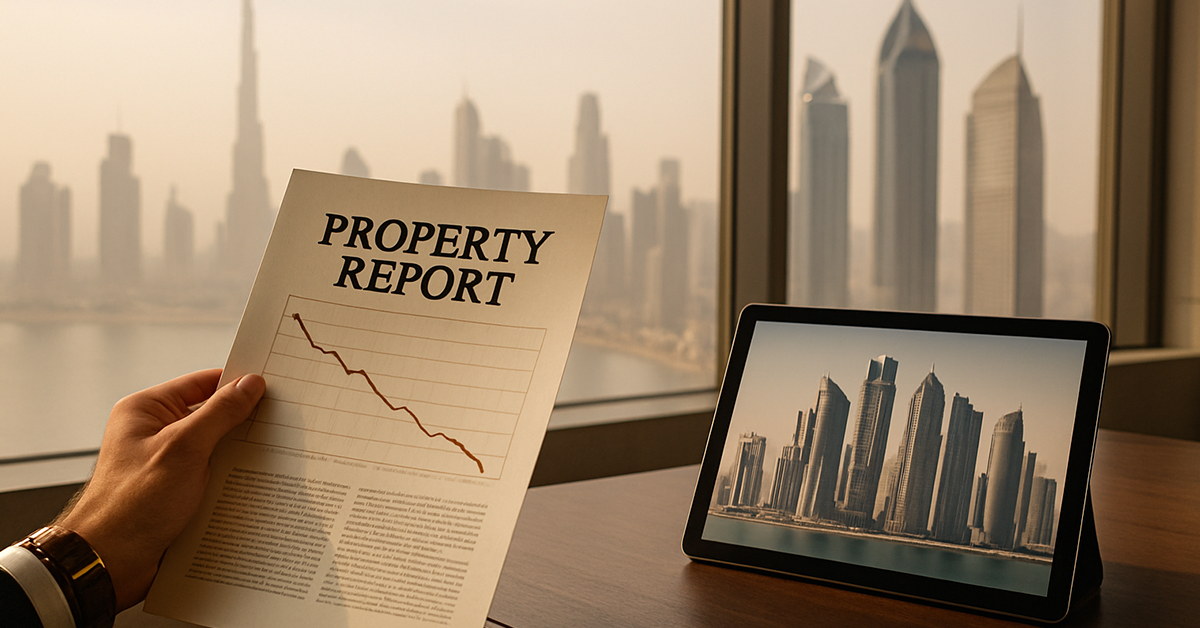
Market Correction After Strong Growth
Dubai’s property market recorded substantial price increases between 2021 and 2024, driven by strong international demand and limited supply in prime areas. Reports indicate that some segments of the market have now reached peak pricing levels, leading to a natural slowdown in growth.
Real estate cycles often include periods of rapid expansion followed by stabilization. Property analysts describe the current phase as normalization rather than decline, with prices adjusting as new supply enters the market.
Supply Expansion and New Developments
Dubai continues to launch new residential and mixed-use projects. As more units enter the market, supply increases can moderate price growth in certain areas.
Developers expanding inventory across off-plan and ready properties create more options for buyers, which can reduce upward pressure on prices. This trend is consistent with global real estate cycles in high-growth cities.
Impact of Global and Regional Factors
Broader geopolitical and economic conditions can also influence investor sentiment. Regional tensions across parts of the Middle East, combined with global interest rate environments, may encourage investors to adopt a more cautious approach.
However, it is important to note that Dubai remains an active real estate market with strong transaction volumes. The slowdown reflects a shift toward balance rather than a structural downturn.
Qatar’s Property Market Stability in Comparison

Long-Term Planning and Controlled Growth
Unlike markets that experience rapid price cycles, Qatar’s real estate sector has developed through structured planning aligned with Qatar National Vision 2030.
Major developments such as Lusail City and The Pearl Qatar are part of long term urban expansion strategies rather than short term demand spikes.
This approach contributes to more measured price movements and reduces the likelihood of sharp market fluctuations.
Regulatory Transparency and Investor Confidence
Property ownership and transactions in Qatar are regulated through the Ministry of Justice Qatar, which maintains centralized land records and official transaction data.
Currency stability also plays a role in investor confidence. The Qatari Riyal is pegged to the US dollar under the supervision of the Qatar Central Bank, providing predictable exchange conditions for international investors.
Infrastructure Supporting Housing Demand
Qatar continues to invest in infrastructure projects, including transportation networks such as the Doha Metro and urban developments across Doha.
The global exposure generated during the FIFA World Cup 2022 has also contributed to increased tourism and international awareness of the country’s real estate offerings.
Residential demand remains linked to business districts, waterfront developments, and planned communities.
What This Means for Gulf Real Estate Investors
For international investors, the current market shift in Dubai highlights the importance of evaluating real estate cycles and long-term fundamentals.
Dubai’s slowdown reflects a transition from rapid growth to a more balanced market, influenced by supply expansion and broader economic conditions.
In contrast, Qatar’s property market continues to be shaped by long-term planning, infrastructure investment, and regulated growth. These factors contribute to a stable environment for investors seeking predictable market conditions.
Both markets remain important within the Gulf region, but they offer different investment profiles depending on risk tolerance and investment strategy.
How FGREALTY Supports Investors in Qatar
FGREALTY provides verified property listings and advisory services for clients exploring real estate opportunities across Doha and the surrounding areas.
Whether you are searching for
FGREALTY agents support both residents and international buyers by offering access to verified listings and local market insights across Qatar’s real estate sector.
FAQs
Q: Is Dubai’s real estate market declining?
A: Current data suggests a slowdown in price growth rather than a decline. The market is transitioning toward a more balanced phase after a period of rapid expansion.
Q: Why is Dubai’s property market slowing?
A: Factors include increased supply, stabilization after strong growth, and broader economic conditions affecting investor sentiment.
Q: Is Qatar a stable real estate market for investors?
A: Qatar’s market is supported by long-term infrastructure planning, financial reserves, and regulated property ownership systems.
Q: Which locations are popular for property investment in Qatar?
A: Lusail City, The Pearl, and West Bay Doha remain key areas due to infrastructure, connectivity, and residential demand.